Monday, June 05, 2006

SPOILERS ABOUND: an occasional digest of reviews, notes, and rants

Vol. 2, No. 5
- - - - - - - - - - - - - - - - - - - - - - - - - - - - - - - - - - - - - - - - - - - - - - - -

In this issue:
reviews of The Battle For Blüdhaven #1-4 and Teen Titans #34-36 / notes on One Year Later Hits and Misses, Mike Mitchell’s Zombie Boy, My Top 50 DC Characters, New (Old) Outsiders in 2007?, and Recent Rentals / rants about various and sundry


- - - - - - - - - - - - - - - - - - - - - - - - - - - - - - - - - - - - - - - - - - - - - - - -



reviews


The Battle for Blüdhaven #1-4 (DC Comics)
Justin Gray and Jimmy Palmiotti (Writers) / Dan Jurgens (Penciller) / Jimmy Palmiotti (Inker) / Javi Montes (Colorist) / Pat Brosseau (Letterer)
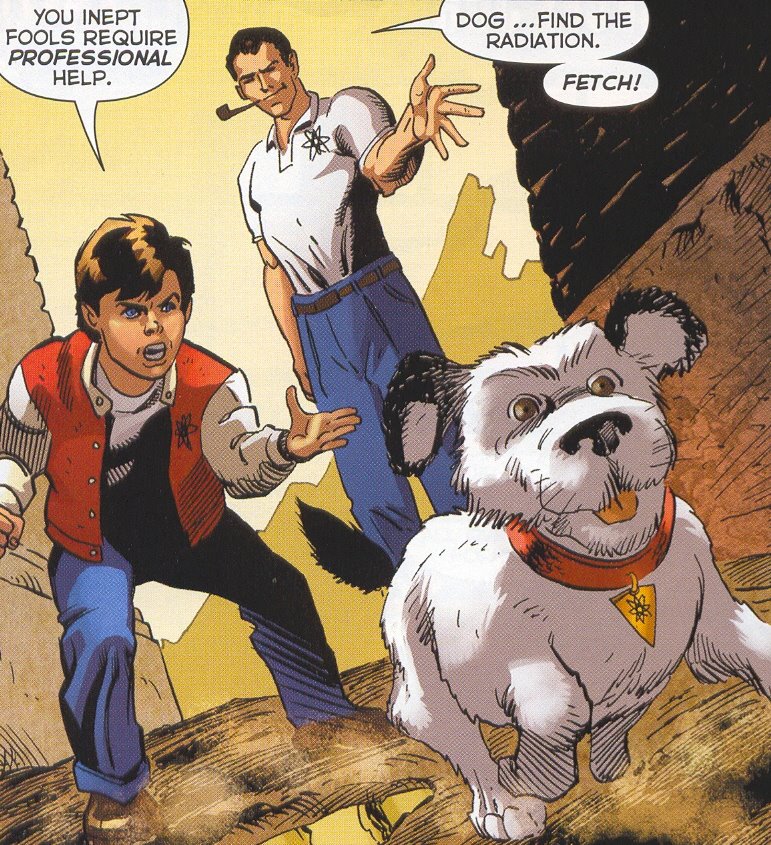
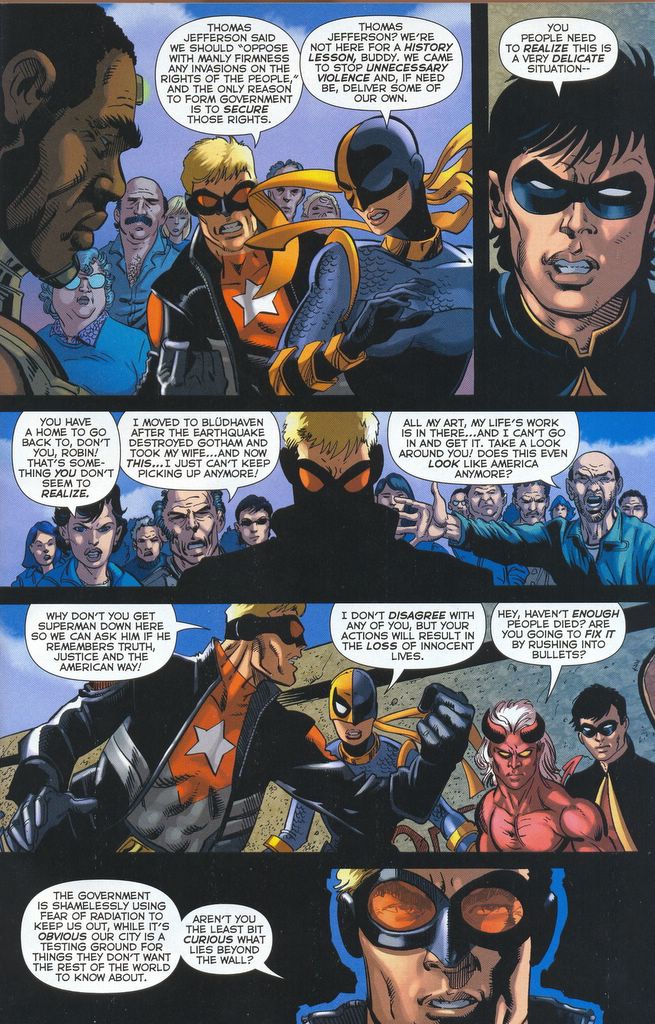
This Infinite Crisis spin-off is a blast: a B-movie that feels like it actually matters (even if it doesn’t). Gray and Palmiotti’s twisty, suspenseful “dead” Hawkman storyline knocked me out last year, so I was happy that they were helming one of the Crisis epilogues. They haven’t disappointed. The reveals and teases have been fun, and, more importantly, the parade of semi-disposable D-list characters through Nightwing’s old stomping-ground has been a real treat—especially the Atomic Knights, the Force of July, and now the Nuclear Family(!). Can we expect a resurrected Dr. Helga Jace to show up next? Here’s an idea: since Gray and Palmiotti obviously have a soft spot for kooky Barr/Aparo Outsiders allies and villains, how about getting them to write a new classic Outsiders series. (For more on this brilliant idea, see below.)


And did I mention? Battle for Blüdhaven is a scrappy little thing: a conspiracy slugfest with teeth. Baby teeth, perhaps, but teeth all the same! The city of Blüdhaven (this one destroyed by an actual "Axis of Evil") has become an inevitable amalgam of recent American disaster zones and the Firebrand v. Father Time face-off serves as an entertainingly broad (but still not inaccurate) riff on the polarized state of political debate in the US. Dan Jurgens’s workmanlike, virtually proletarian art-style (normally not my favorite) is a perfect choice for this mini’s muscular pulp politicking and eighties-style superhero intrigues. And bonus: he can draw Raven’s cowl properly. Young Titans artists who attempt the absurd feat of showing Raven in flight, take note.


Teen Titans #34-36 (DC Comics)
Geoff Johns (Writer) / Tony Daniel (Penciller) / Kevin Conrad & various (Inkers) / Tanya and Richard Horie (Colorist) / Travis Lanham (Letterer)
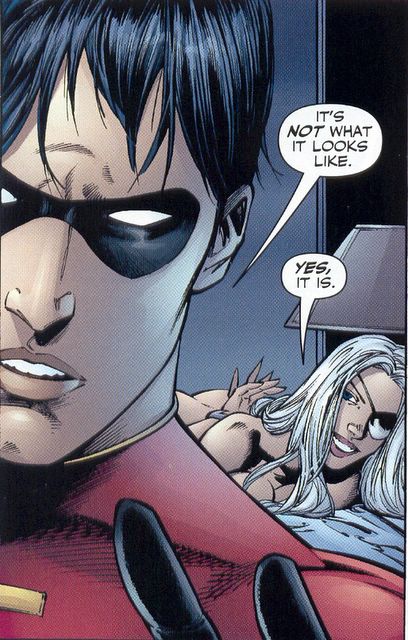


What does it look like? If it didn’t date me so severely, I’d say Porky’s. So let’s make it American Pie instead. It’s One Year Later, and the Teen Titans aren’t just New, they’re hot...and bothered. Not that it isn’t all highly amusing, but I’m old enough to remember a time, back in the stone age, when a tiny one-panel above-the-waist shot of Dick and Kory being awakened from their freshly mussed bed in the middle of the night made comics-code puritans hyperventilate. And here we have Rose Wilson, nude, handcuffed, and raring-to-go on Robin’s mattress…

…and lighting a cigarette off of Kid Devil in a scene that would put the subliminal advertising masterminds of Big Tobacco to shame…


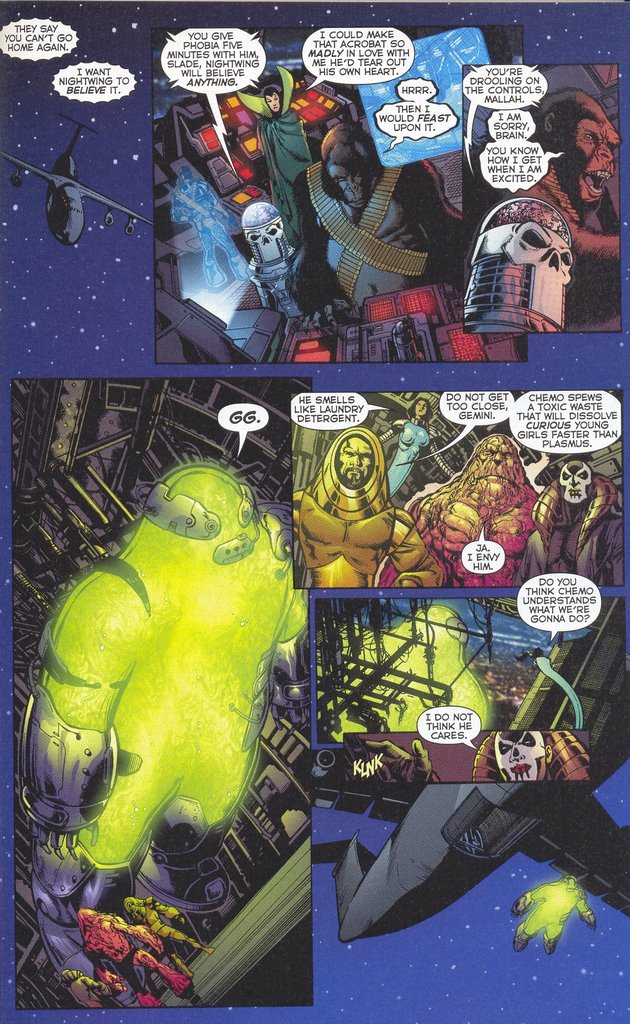
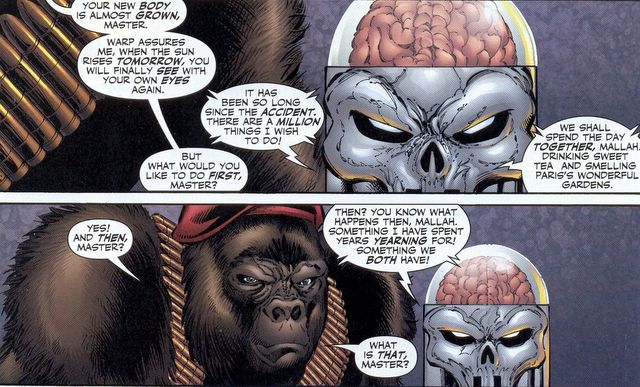
…meanwhile, criminal super-couple Monsieur Mallah and the chrome-plated death-phallus are whispering nothings so sweet and so steeped in double entendres that I can hardly concentrate on the exposition…!


Once one wades through all the teen sex-comedy hijinks, though, one might be surprised to discover that the OYL Teen Titans are notable for something that’s been missing from the title for a long time: chemistry. The two things are obviously related. The title’s recent emphasis on bedroom farce is only the most obvious sign of a new vitality and playfulness that has entered the series in the last few issues. And it’s not all farce either—the developing romance between Rose Wilson and Kid Devil feels both genuine and sweet. In three short issues, Johns has established Rose and Eddie as sympathetic three-dimensional underdogs. Add to the mix a grieving, angry Wonder Girl and a darker, driven Robin. After three years of relative indifference (and many years before that of utter despair), I’ve finally got some Titans I can care about again.

How did this happen?

It’s no secret that the Titans have been in a conceptual muddle ever since the second New Teen Titans series folded back in the mid-nineties.


Even before that series ended, the stories of many of the characters seemed played out—particularly those characters created specifically by Wolfman and Perez for the relaunch of the original Teen Titans back in the early eighties. After nearly 200 issues, what else could be done with Raven? Starfire? Cyborg? These were Wolfman’s characters all the way, and even though he was burnt out on them, no one else seemed capable of picking up the authorial reigns. The disastrous addition of Danny Chase midway into the second series seemed only to confirm that the Teen Titans had become a team impervious to change or growth. That’s why the spectacular year-long Titans Hunt storyline was such a relief. Finally, there was a real acknowledgment that everything had to change—and change radically—in order to reinvigorate the series. Suddenly, instead of the usual faces, Raven’s mother Arella took center-stage with Deathstroke, Wildebeest, Phantasm, Red Star, and yes…even Pantha. Cyborg was rebuilt. Joey was revealed as a traitor. And it was all damn exciting—one of the best Titans stories since the five part Trigon arc that inaugurated the second series. Sadly, the renaissance was short lived. New character additions grew increasingly absurd, the series soon degenerated into nonsense, and was mercifully cancelled.


The Dan Jurgens Teen Titans reboot that ran from 1996-98 demonstrated the difficulty of relaunching the property with new faces. It didn’t help, of course, that despite a tenuous connection to Titans mythology, this was basically a new concept being marketed under a recognizable brand name. I hated everything about it, and so, apparently, did everyone else. The next Titans relaunch, helmed by Devin Grayson, bent the stick violently back in the other direction, attempting a nostalgic return to roots. But if the sense that the team dynamic had been played out was already palpable in 1996, it was even more powerfully present in 1999 as we were now faced with even older versions of characters like Troia, Cyborg, Starfire, Nightwing, and Tempest, who all improbably regressed, losing all the depth they had achieved during the height of Wolfman’s run. This version of the series occasionally transcended the oppressive weight of nostalgia (thanks to the addition of Roy Harper, Jessie Quick, and others) but on the whole, it confirmed the truism that you can never really go home again. The bewildering arrival of not one, but FIVE Danny Chases (those oppressive DEO kids) to reboot the series mid-run neatly illustrated the degree to which DC editors at that time had learned nothing from the failure of the Dan Jurgens Teen Titans.

When Geoff Johns set about launching the current Teen Titans series in 2003, he showed that he had learned the lessons of both previous flops. Like Devin Grayson he combined old and new Titans, but with a greater sense of novelty and change. Indeed, the presence of the older Titans now seems like it was a bait-and-switch strategy to lure back the old readers while foregrounding and promoting the Young Justice Titans into familiar roles. This had many obvious advantages, chief among them was that Johns’s “new” Titans felt reassuringly familiar to old fans like me. I was ready to give Tim, Cassie, Bart, and even Connor a chance just because, when combined with Raven, Cyborg, Starfire, and Beast Boy, Johns’s Titans at least looked like the (old) New Teen Titans. (Yes, I really am THAT easy.)

But, even with the bone that Geoff tossed to aging fanboys like myself, something about the new series has never felt right. For awhile I thought it might be the pacing (I miss the density of those un-decompressed old stories), or perhaps just the art, which has never done much for me. What the OYL revamp reveals, however, is that it’s the composition of the team itself that’s been holding back the new series.

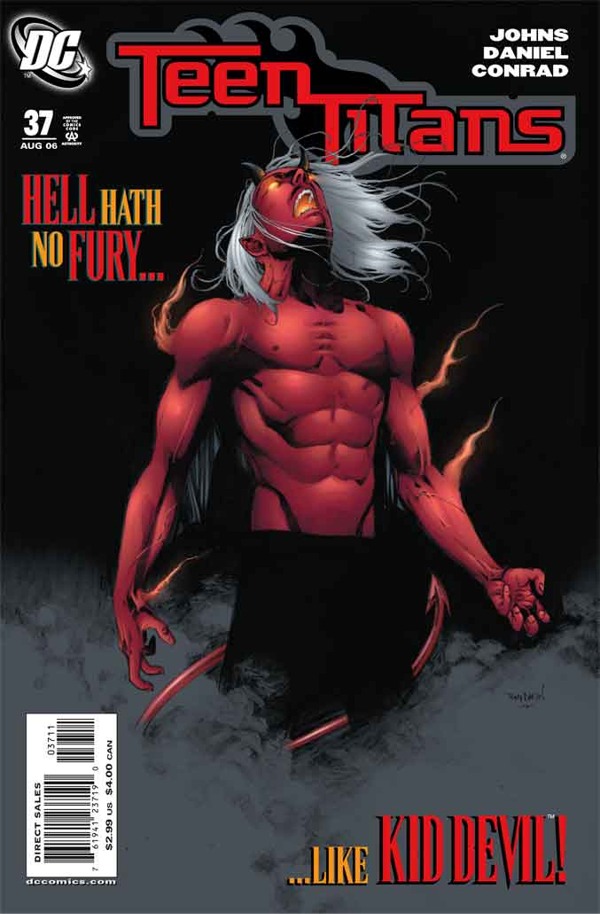
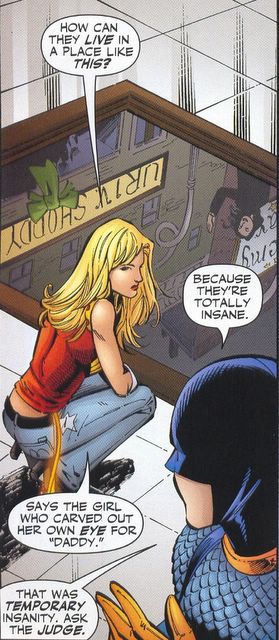
Johns’s hot-of-the-press Titans interview at newsarama (which, serendipitously, was released while I was in the middle of writing this) confirms as much: “I wanted to shake the team up, and I was nervous doing it. I knew the reactions would be ‘Ravager?!’ and ‘Who the #@$% is Kid Devil?’ But because of Superboy’s death, it forced us to take chances, and I’m glad. For a long time our line-up seemed to look like the former Young Justice kids smashed together with the New Teen Titans. It was great for the first three years of the book but it was time for something new. And the OYL to me seemed like an opportunity, and a requirement, to seriously alter the status quo.” Hear, hear. It’s easy to see why Johns needed to start this series the way he did, but what we’ve been reading since his Teen Titans #1 was essentially a drawn-out transition from the often forgettable, sometimes awful Titans stories of the post NTT-era. Even with only three issues in the bank, the OYL Titans series is already far more interesting than the “smashed together” Young Justice Titans of the past three years.


Clearly, Johns has not abandoned any of his nostalgia for the Wolfman/Perez New Teen Titans, but now, finally, this nostalgia no longer takes the form of hollow quotation (an all-new Wonder Girl! Kid Flash! Robin!) but rather, quotes and synthesizes more creatively: Kid Devil is a kind of junior Trigon with the wounded horn-dog sensibility of a young Gar Logan, and Rose Wilson is an all-new Ravager explicitly crossbred with the dangerous Lolita edge of the original Terra. (Indeed, their budding romance hits all of those old Gar-Terra buttons all over again, but with a difference.) Rather than trying to literally reproduce the Wolfman/Perez Titans, the new Teen Titans lineup seems to be trying to reproduce the underlying chemistry of those characters that made that beloved incarnation of the team so great. Moreover, like its predecessor, it gestures at the past without being slavishly tied to it. The numerous failed Titans series cluttering up my longboxes ably demonstrate how difficult this formula is to master, but if anyone can do it, it’s Johns. The fact that the forthcoming “membership drive” storyline sounds reminiscent of Titans Hunt is a bonus. (The only dismaying note in all this is the introduction of Wendy and Marvin as “caretakers” of the Tower. Oh brother. Did someone owe Alex Ross a favor? I’m trying to keep an open mind.)


The current storyline, which sees the return not just of a cool and creepy new Doom Patrol, but the reintegration of Grant Morrison’s Doom Patrol into the DCU is itself cause for celebration. Whereas many of the Titans stories of the past three years have felt more like Young Justice: The Next Generation, for this fan at least, the Doom Patrol story set in the Chief’s haunted castle feels like a real Titans story—a story that grows organically out of the strongest period of the Titans mythology and promises a satisfying mix of new and old. Johns concludes his newsarama interview by noting, “We’ve been, obviously, taking a big risk with the new direction of Teen Titans but we really wanted to take advantage of the OYL jump and shake the book up.” All I can say is: it’s about time.


notes


For the Record: DCU – One Year Later Hits and Misses


The One Year Later DCU is breaking my bank account, and they’re not done yet—but who needs food and clothing? Not surprisingly, 52 is at the top of my pile every week. The weekly pace and focus on cool second-stringers gives this series a sense of realism and depth that is often difficult to achieve when dealing with iconic characters like Superman, Batman, and Wonder Woman. Joe Bennett’s snazzy pencils deserve extra credit for the feeling of depth that attaches to the 52 DCU: finally, someone’s drawing detailed BACKGROUNDS again. Beautiful work, Joe! Needless to say, I love J. G. Jones’s covers, the detail-oriented storytelling, the weekly cliffhangers, and those little quarter-page teasers. The weekly reponses by comics fandom add to the fun. Mark Fossen’s 52 on 52, Douglas Wolk’s 52 Pick Up, and of course DC’s official 52 Website are all icing on the cake. Finally, Mister Mind’s cocoon??? Oh Grant, you are the master of all things. A thumbnail microcosm of the new DCU.


Of the regular OYL titles, Batman, Detective Comics, Superman, Action Comics, and the Teen Titans are all better than they’ve been in ages. (Is it just me? Or is "The Crime File of Jason Bard" not hilarious?) I’m also enjoying the slick-looking and smartly-scripted Firestorm, which I just started picking up. The Best OYL title, however, may actually be one that they’ve tampered with the least. Gail Simone and Paulo Siqueira’s Birds of Prey remains DC’s powerhouse sleeper—probably the smartest and most consistently entertaining mainstream comic DC publishes.


If you’re not reading it yet, I may have to reevaluate our friendship.


Not surprisingly, Gail’s Secret Six is the strongest of the Crisis spin-offs – the high-octane weirdness of the Villains United mini continues unabated here. Gail’s crackling, bizarre, surprise-laden script continues to pull no punches and is abetted by Brad Walker and Jimmy Palmiotti’s gritty, sensual art.

As mentioned above, I’m enjoying Battle for Blüdhaven and am thrilled that Willingham is back as both writer and artist on the Shadowpact ongoing. Blue Beetle is worth your time and shows enormous promise. The most pleasant surprise of the post-Crisis spin-offs so far, though, has been Checkmate. The OMAC Project miniseries was okay, but issue #2 of Rucka and Saiz’s new secret agent book is fantastic. Rucka’s novelistic script feels like a return to the heyday of Ostrander’s Suicide Squad and Saiz’s art really classes up the joint. Just look at his rendering of Kobra, stunningly realized as a slithering blend of old Eerie Magazine snake pits and Perez’s Brother Blood. I have very high hopes for this title, which is poised to be DC's most “adult” book, and I hope the team of Rucka and Saiz sticks together for the long haul.


This isn’t to say that there haven’t been a few question marks or even fumbles. I’m keeping my fingers crossed for Aquaman: Sword of Atlantis. Guice’s art is exquisite, I’m enjoying the mystery that Busiek’s spinning, and digging the weird characters and exotic locales. But there’s a lot of exposition here, and there’s also something a bit hokey about the series’s undersea primitivism (eg. King Shark’s grass skirt). I want to love this, but like most good fantasy epics, this one’s probably not going to fire on all cylinders until the groundwork has been laid. I’m willing to be patient because the book is so beautiful, but with so many good titles vying for attention, I’m worried that this one may not have the luxury of a slow start. Another strange one is JSA. While I’m sure the relaunch of The Justice Society of America will be great, the Levitz/Rags/Ross/Perez story is turning out to be sort of underwhelming. With a creative roster like this I should be riveted, but I’m just kind of…mildly entertained. And then there’s Winick’s Outsiders. Before Crisis, this was the book I loved to hate—and sometimes just hated. The recent Jay Garrick reveal was nifty, but this series is a drag. Tom Bondurant has already summed up my thoughts about Hawkgirl, which has certainly been the biggest disappointment of the batch. Like everyone else, “I really wanted to like this” but Simonson’s gothic pulp adventure feels like too radical a U-turn for this series and—legend or not—Chaykin is not the right artist for Kendra’s adventures. The line work is stiff and the inking is so clotted in places that the visuals just feel murky rather than atmospheric. Despite the tepid Rann-Thanagar issues, this series was just hitting its stride under Gray and Palmiotti’s tenure. Perhaps a further reshuffling of creative teams is in order, but I’m sticking with it for now.


Mike Mitchell’s Zombie Boy


I’ve been corresponding recently with Mike Mitchell, whose nifty new self-published comic book, Zombie Boy, is now available for order over on his new blog, Mitchell Family Comics. (Here’s a link directly to a promo post on Zombie Boy.) Mike’s art-style harkens back to the wonderfully creepy EC horror titles of the 1950s—Tales From the Crypt, The Vault of Horror, and The Crypt of Terror—but his tale of an undead teenager’s search for justice and meaning transforms the motifs of classic horror comics into a very personal-feeling existential questioning of life, morality, and authority. I really enjoyed Mike’s first 16-page effort, Zombie Boy #1, and eagerly await the second issue, which is apparently well underway. Be sure to check out Mike’s site and to give Zombie Boy a try!


My Top 50 DC Characters (The Great Curve)

Well, that was fun. Thanks Tom! At this point, no one’s interested in who guessed right, only in the freakshow of embarrassing disclosure. I therefore present my omissions and overlaps without comment, and try vainly to justify some strange choices. (Oddities are linked to their wikipedia entries.) As I look at this list now, many of the choices and rankings are objectively indefensible. How did Wonder Woman end up at #29, trumped by Metamorpho and Vandal Savage? Sorry Diana. Clearly, I shouldn’t be allowed to fill out surveys.

Glaring Omissions: Doctor Fate (50), Animal Man (47), Green Lantern/Alan Scott (46), Black Adam (45), Sandman/Dream (44), The Atom (43), Bizarro (42), Jonah Hex (40), Elongated Man (39), John Constantine (38), Booster Gold (35), Guy Gardner (33), James Gordon (32), Mister Miracle (31), Alfred Pennyworth (30), Impulse/Kid Flash (28), Power Girl (27), Flash/Barry Allen (25), Plastic Man (24), Blue Beetle (22), Two-Face (21), Robin/Tim Drake (19), Space Cabby (18) [???], Aquaman (17), Catwoman (16), Starman (13), Martian Manhunter (12), Green Arrow (10).
My Picks:
1. Swamp Thing (37)
2. Batman, Bruce Wayne (1)
3. Superman, Clark Kent (2)
4. Lois Lane (11)
5. Joker (3)
6. Robin/Nightwing, Dick Grayson (4)
7. Oracle, Barbara Gordon (7)
8. Green Lantern, Hal Jordan (14)
9. The Question, Vic Sage (26)
10. Darkseid (23)
11. Spectre, Jim Corrigan (34)
12. Starro – Such a brilliant, simple design. The horror of the swarm and its vicissitudes.
13. Solaris – Genuinely frightening. The secret location of Grant Morrison’s brain.
14. Captain Marvel, Billy Batson (9)
15. Vandal Savage – DC’s great Bond-villain.
16. Lex Luthor (5)
17. Phantom Stranger (48)
18. Metamorpho, Rex Mason – Visually, one of DC’s most striking classic characters. A poor man’s Ben Grimm, perhaps, but Mike W. Barr and Jim Aparo made me love him in BATO.
19. Adam Strange (41)
20. Hawkman, Carter Hall (36)
21. Deathstroke, Slade Wilson (52)
22. Zatanna (20)
23. Black Lightening, Jefferson Pierce – Another Outsider. Anyone seeing a pattern here?
24. Cyborg, Vic Stone (51)
25. Speedy/Arsenal, Roy Harper – Before anyone was exploring the idea of the fallen side-kick, there was Speedy. One of those rare characters who seems impervious to writerly bungling and, in the right hands, potentially DC’s most interesting fuck-up.
26. Flash, Wally West (8)
27. Black Canary, Dinah Lance (15)
28. Mister Terrific, Michael Holt (49)
29. Wonder Woman, Diana (6)
30. Crazy Jane, Kay Challis – The archetypal Grant Morrison character and a curious but not inappropriate legacy for one of William Butler Yeats’s most interesting poetic masks.
31. Robotman, Cliff Steele – Am I really the only one who thinks he belongs on this list??
32. Flash, Jay Garrick (29)
33. Wildcat, Ted Grant – JSA #10. Read it NOW.
34. Raven – Visually, the best Perez-designed New Teen Titan. For some reason, no one else seems capable of drawing her. For that matter, since Wolfman, no one seems capable of writing her either. Thrilled that he’s writing the new mini.
35. Wonder Girl, Donna Troy – Despite the recent attempt at resuscitation by Jimenez, Garcia-Lopez, and Perez, still DC’s most ruined character. Some of us still remember, though…and carry a torch.
36. Starfire, Koriand’r – Perez’s alien dream-girl is much mocked, but unfairly. On par with Raven as a superb character design. For better or worse: iconic.
37. Katana, Tatsu Yamashiro – Judd Winick is currently showing us why this complex female samurai makes no sense without Halo. Hopefully a reunion is in the works.
38. Amanda Waller – A stereotype grown complex. As important to DC as Nick Fury is to Marvel.
39. Captain Cold, Leonard Snart – Blame Geoff Johns for this one. His Flash stories sold me.
40. Shade, the Changing Man – Steve Ditko’s design is stunning and the Vertigo series was a favorite. I wish they’d bring him back.
41. Amethyst, Amy Winston – Bear with me. I’ll explain in more detail this summer.
42. Brother Blood – Trigon was great, and probably belongs on this list too, but Brother Blood scared the crap out of me. Another perfect Perez design, though I hate what Johns did with him in the new series.
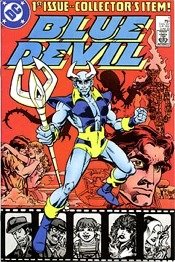
43. Blue Devil, Daniel Patrick Cassidy – I must have a thing for Dan Mishkin characters. I loved this comic! And Blue Devil’s look epitomizes (with Booster Gold) a period of fun eighties creativity that has been much underrated, though is happily making a splashy comeback in the current DCU.
44, 45, 46. Projectra/Sensor Girl, Wildfire, Drake Burroughs, Karate Kid, Val Armorr – Very personal choices that I will explore in more detail at some point. It’s difficult to pick a favorite Legionnaire, but Jeckie, Wildfire, and Val were three of my early obsessions, likely because, as a young reader, they each embodied fairly archetypal (and now somewhat embarrassing) ideals and fantasies.
47. Baron Winter – I’ve said it before. I’ll say it again: DC needs to collect Marv Wolfman and Gene Colan’s paranormal masterpiece, Night Force.
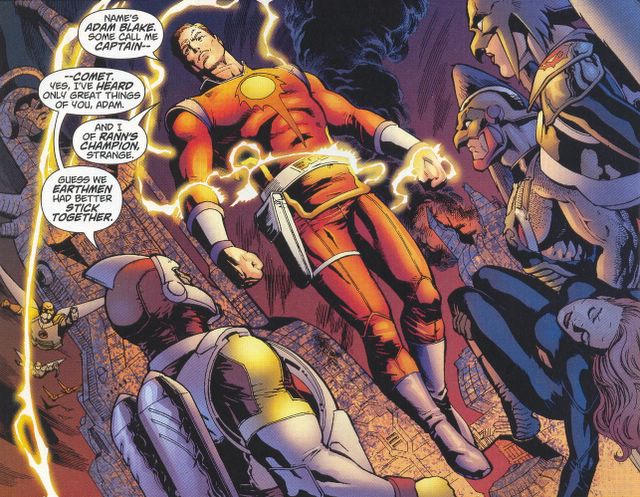
48. Captain Comet – I have a thing for Captain Comet. I can’t explain it. Needless to say, the announcement in this post at newsarama made me very happy.
49. Doctor Phosphorous – The coolest-looking second-string Bat-villain ever. Please Grant, revive him.
50. I…Vampire, Andrew Bennett – Before Anne Rice’s Lestat and friends, there was I…Vampire. Admit it, if you’d thought of it, he’d have been on your list too.


New (Old) Outsiders Series in 2007?

I know, I know. You’re sick of hearing about it. And there’s nothing more pathetic than a grown man’s nostalgia for childhood fantasy-objects. But the signs are there. They really are.
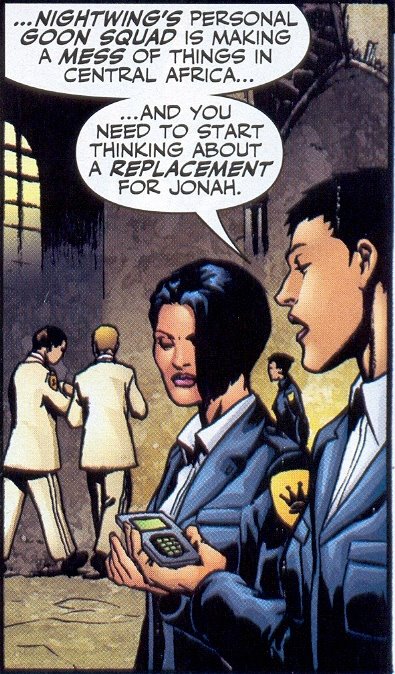

Battle for Blüdhaven currently showcases the return of off-beat Outsiders-villains, the pathologically patriotic Force of July and the Nuclear Family—Mike W. Barr and Jim Aparo’s ingeniously imagined satire of the “perfect” 1950s nuclear-family that turns the fears of the Atomic Age into a clever metaphor for normative dysfunction from Outsiders (second series) #1-2.

You can’t turn around without bumping into Black Lightening and Metamorpho these days. And Katana is back in full force too, currently awaiting rescue from “Nightwing’s personal goon squad,” as Greg Rucka so aptly calls Winick’s cheerless Outsiders OYL reboot.

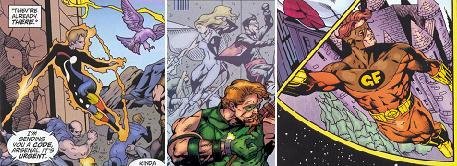
And…what have we here? Gail Simone and Dale Eaglesham’s exquisite Villains United Special had more than a couple of classic Outsider cameos:


I also note the interesting announcement of a reprinting of the Terra stories from Wolfman and Perez’s New Teen Titans 26-34 in trade paperback…in advance of the reprinting of these issues in the slowly emerging archive editions of the series. Where Terra goes, can Geo-Force be far behind?

And what about this late addition? (I wrote this last week, before 52 #4 came out.) There’s Halo doing her “Auracle”-speak right there on pages 1-3. I tell you, the writing is on the wall!

DC wouldn’t toy with me would they? And even if they would, surely Gail Simone isn’t so cruel! Right Gail? Um…Gail?

My new Classic Outsiders creative dream-teams: Gail Simone & Dale Eaglesham OR Justin Grey, Jimmy Palmiotti, & Joe Bennett. I'm not choosy, really. Either would be fine!


The Screening Room: Recently Viewed

Why have I been renting so many movies lately? Perhaps to make up for the pain of my recent trips to the multiplex. So, thanks Da Vinci Code!

Tod Browning’s Freaks (1932) – Carnivalesque exploitation (literally) with a guilty conscience. Moody and weird; the climax—though brief—is unforgettable.

All About Eve (1950) – Joeseph L. Mankiewicz’s ultimate showbiz satire is wicked, cutting, brilliant – pick your adjective. They sure don’t make them like they used to. Plus: all the corrosive, dead-pan wit you’d expect from Bette Davis.
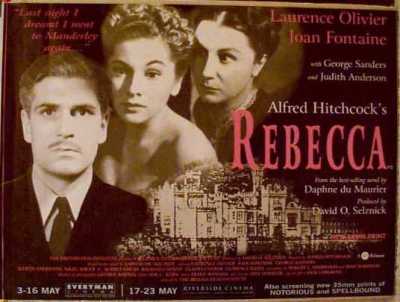
Rebecca (1940) – Hitchcock’s creepy and exquisitely filmed gothic romance. The Mandelay scenes are transporting and the suspense about the first Mrs. DeWinter is torturous. The spectacular first hour and denouement, more than make up for the draggy third quarter.

Don Siegel’s Escape from Alcatraz (1979) – Compelling, uncanny, and possibly profound. The beauty of this film is its gritty simplicity, but there’s more to its relentlessly linear narrative than meets the eye. Clint Eastwood is fantastic in the lead role. My favorite closing credits sequence ever. (Like the film itself, they are an eerie masterpiece of understatement and suggestion.)

Prophecy (1979) – Tedious eco-terror, occasionally relieved by so-bad-you-laugh monster effects. Amusing bonus for Falcon Crest fans: Robert Foxworth stars.

Appointment With Death (1988) – A somewhat inept adaptation of the Agatha Christie novel with Peter Ustinov as Poirot and all the usual suspects. Cheesy fun, primarily for the broad, shtick-heavy performances by Piper Laurie and Lauren Bacall. Carrie Fisher is fun to watch, as always, even though her part makes no sense.
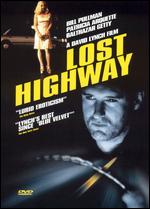

David Lynch’s Lost Highway (1997) and Mulholland Dr (2001) – a great pair to view together, given the prominence of the road-motif in both. The latter is a psychoanalytic masterpiece, set aglow by Naomi Watts’s luminous performance (has real/fake joy EVER been so convincingly portrayed on screen?); the former is grungier, more disorienting, and completely unsettling. Robert Blake, in a hair-raising role, stays with you. And not in a good way. (On Mulholland Dr, see David Fiore’s fascinating round-up). High on these arresting nightmare visions, I let my guard down and rented Lynch’s dismal sci-fi snooze-fest, Dune (1984). This was my second try and I think I made it more than half way this time. GodDAMN that is a boring endurance-test of a film.

Just watched the fascinating Donnie Darko (2001) for the first time a couple of nights ago. Still pondering. And still humming that damn INXS song.

And while I’m on the topic of movies, let me plug my debate with Thomas over X3 one last time. If you’ve already suffered through it (and even if you haven’t) click on over to David Golding’s wonderful Pah! for another enthusiastic and intelligent take on X3. Like Thomas, David liked it more than I did; between the two of them, my resolve is beginning to crumble…a LITTLE. (Update: David has just added a second response here.)

Finally, even though it’s old news now, V for Vendetta is still my favorite superhero film of the year. Marc Singer, sharp as ever, explains why (with several caveats) in his superb review essay on the film.



rants


Various and Sundry

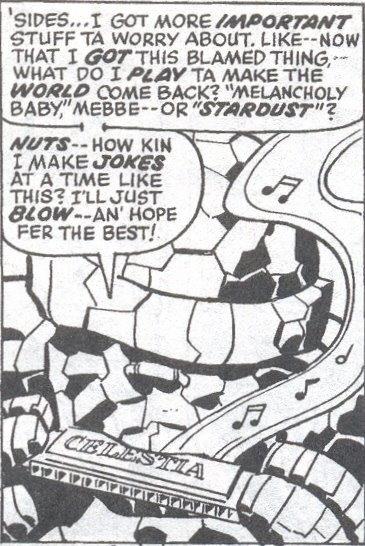
The LAST issue of the The Thing came out last week. Even though we lost perfect Thing-penciler Andrea DiVito a couple of issues back, this one still rankles. Way to stand behind great books, Marvel. Wow…seven WHOLE issues.

I love Blogger. Honest. And I’m reluctant to bash them for any reason, given that they have so kindly given me this wonderful little space on the web FOR FREE. But Blogger’s Image-upload function has been ignoring my desperate, tearful petitions for several days now, despite much cache-clearing and rebooting activity on my part. I’ve resorted to uploading through Hello and reformatting the pics manually – quite a trick, given my rudimentary (one might even say “stone-age”) knowledge of html. As always, dear readers, your technical advice is welcome!

Friday, June 02, 2006

Little Scott in Slumberland, or How I Learned to Stop Worrying and Love the Beast / an X3 response-essay by Thomas

They went to see X-Men 3: The Last Stand and what began as a polite difference of opinion has rapidly degenerated into a hair-pulling, eye-gouging cage match! Jim Roeg hated it! Thomas loved it! They've both spent too much time in University! Witness the horrible results below!

First there was my own savaging, uncharitable review of X3; now Thomas responds with a defense of the film so dazzling and ingenious that I’ve been momentarily stunned into awed silence. Enjoy it while it lasts, folks! And thanks, Thomas, for this erudite defense of the film - but...does this mean I have to see it AGAIN?


Little Scott in Slumberland, or How I Learned to Stop Worrying and Love the Beast

by Thomas

The soldiers dissipate, like leaves blowing in the wind. Reality itself seems to fray at the edges. A great destructive force pours forth from Jean Grey, the Dark Phoenix, and Wolverine battles against it. As he pushes steadily forwards - towards her - his costume begins to disintegrate, and then his skin. Brief flashes of the adamantium that is fused to his skeleton appear and then disappear as his flesh is torn away and regenerated once more. It’s a sublime moment, and undoubtedly visually stunning. It is also representative of the film as a whole. X-Men: the Last Stand is a complex and dazzling cinematic work that does not try to hide the machinations of the Hollywood machine that powers it, but rather reveals them like glimpses of fused metal, only to cover them back up by incorporating them into the strange reality its narrative.

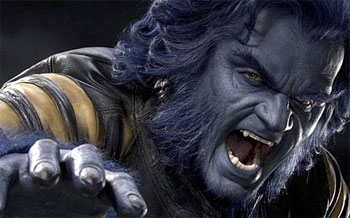
The Beast looks terrible. There is no question about it. But to compare Hank McCoy to the infamous Jarjar Binks, as Jim Roeg does, is to totally misinterpret what is being done by the film and how the character functions within its narrative context. Jarjar fails completely because Lucas tried so earnestly to create a character that felt real, and ended up with a cartoon. It was not, however, the special effects that failed to integrate the CGI character into the real world environment. It was the writer/director and the voice actor who portrayed him. To suggest that Ratner and Co. were aiming for this same realism with the Beast is ridiculous. Everything about the Beast’s conceptualization and design calls attention to itself, not as an attempt at realism, but as something else entirely. Unlike the pathos producing and surprisingly convincing portrayer of Nightcrawler in the previous film, X3 uses the Beast to produce something much more along the lines of Brecht’s “Verfremdungseffekt”. In looking so fake, so badly constructed, so blatantly absurd, the Beast draws attention to his own reflexivity. The fact that the Beast looks so unreal explicitly tells the audience that we are no longer in a Brian Singer X-Men film.

Singer’s realism was commendable, and the sci-fi framework within which he situated his films was nearly flawless, but as Roeg points out, X3 is much more THX-1138 than it is Star Wars. The narrative comforts provided by an easily understandable science-fiction universe rooted in realism have been abandoned, and the Beast serves as a signifier of just that. The Beast is one of those shiny metal moments. His artifice tells us that the “real” X-Men director has left the building, that someone new is in charge, and that he is going to take us somewhere else entirely.


The “death” of Cyclops is another one of these adamantium moments. His “death” is handled so clumsily, so strangely, and with such artificial and false logic that it too produces the same distancing effect. Just why is the character in the film at all? There is no logical reason for his inclusion. He serves no function, and even his “death” is non-existent. X3 appears to pick up where X2 left off, in terms of both tone and narrative, but from the moment Scott leaves the mansion, something strange begins to happen. The reappearance of Jean and the total non-explanation for why she is alive, or why she has appeared there at that moment, is jarring and strange. The pacing feels all off: Scotts crying in anguish, then suddenly Jean is there, then they are kissing, then she’s telling him to take off his glasses, then she’s sucking the life out him… and then he wakes up, because this is clearly a dream sequence. It has all the signifiers of a dream sequence: nothing feels real or makes sense, yet we are pulled forward by the teleological sense that these events are supposed to happen because that-is-how-the-dream-unfolds. The only way this sequence can end is with Scott waking up. Only he doesn’t.

Not long afterwards, Wolverine and Strom arrive at the same location. It is a brilliant scene, specifically because the dream never ended. Wolverine and Storm walk through a non-realist world of mist, where droplets of water drift slowly and beautifully upwards away from leaves, rather than plummeting down upon them. When Storm uses her powers to clear away the fog, there is a brilliant reveal, and we see that our heroes have walked into a Salvador Dali painting. Across the alien surface of the dry river bed floats dozens of rocks. It is a fascinating image, carrying with it all of the power of one of Dali’s surrealist landscapes. Ratner is using the Lynchian language of dream cinema, and he is making almost explicit allusions to Dali! His Beast pushes us outside of the film, rather than draw us in, and the character of Cyclops seem to exist for no reason at all. By this point in the film it has become blatantly obvious that Ratner has abandoned Singer’s sci-fi realism and entered the realm of surrealist cinema.


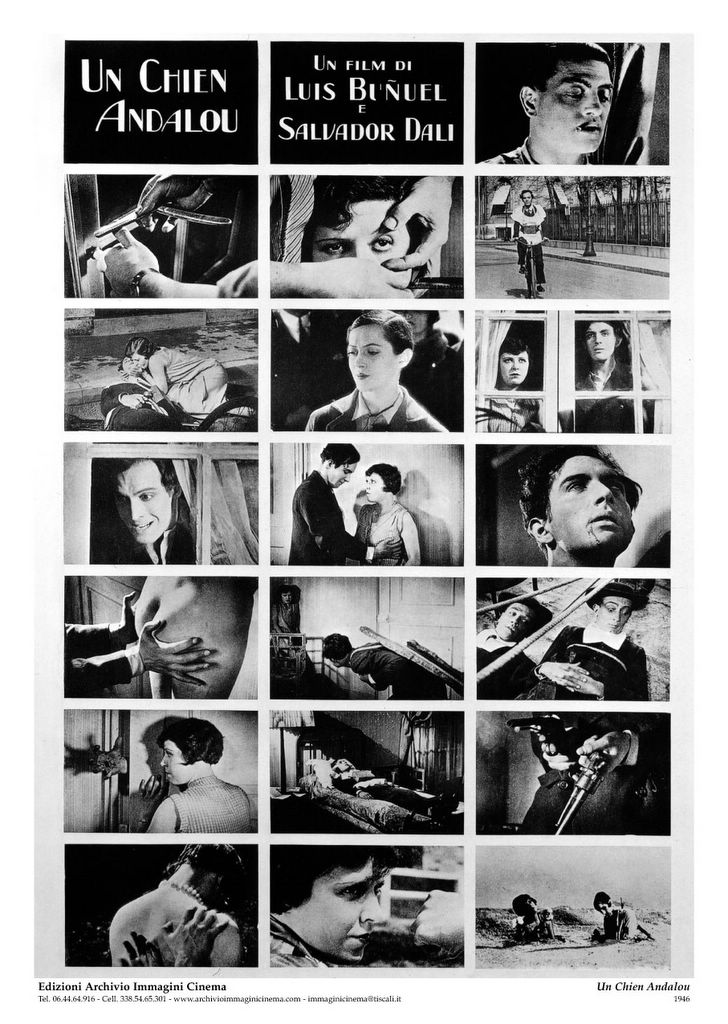
It was Dali himself who first brought surrealism to the medium of filmmaking with his and Luis Bunuel’s 1929 film Un chien andalou, and the criticism that Roeg directs towards X3 (that its “a jumbled mess”, that its “all special effects and no heart”, that the narrative is subordinated to “only the symbolic”) are the same criticisms that were directed towards Bunuel and Dali’s groundbreaking film. Bunuel would go on to direct several surrealist masterpieces, all of which question the assumptions audiences and filmmakers bring with them when they enter the cinema. Jim Roeg concedes that “films must obey their own dramatic logic,” but the work of filmmakers like Bunuel actively questions that very conceit. One might argue that surrealist cinema obeys only its own narrative illogic.

Does it make sense that Wolverine and Jean would make out passionately in the hospital ward? Not particularly. X2 worked hard to establish the fact that Jean would never actually commit to someone like Wolverine, and Logan’s nobility has been established to the point where it is quite doubtful that he would ever actually partake in an affair or steal his ally’s wife. Yet there they are, making out on the hospital best, Jean’s nails tearing at Logan’s flesh. It makes no sense, and yet it feels right - in dream logic sort of way. But at the same time it also feels wrong, and Wolverine knows it. This is why he pulls away from Jean. For a moment, he realizes that they have entered a dream. He realizes the fictionality of the reality in which this scene is taking place. He would never actually consummate his desire for Jean and she would never allow him to do so, yet here they are, like some sort of twisted fantasy made real. And that, of course, is the power of the Phoenix. That is what Jean brings to this film.

Roeg’s accusation of political conservatism fails to take into account the paradoxical non-political and yet poly-political nature of surrealist cinema. The haphazard juxtaposition of the Cure narrative with the Dark Phoenix storyline, and the seemingly illogical and nonsensical construction of scene placement and character motivation in X3 explicitly resist easy categorization and homogenization. The plurality that Roeg yearns for is in fact there throughout the film, and is embodied in the Dark Phoenix herself. Jean is a force of chaos and her existence tears at the foundations of reality, as artificially constructed within the film. Once she is unleashed by Scott, notions of realism and linearity begin to crumble and disintegrate. Few of the film’s narrative choices make obvious sense logically, but when events happen it seems like they were supposed to happen (the way it does in a dream) and we, as an audience, are able to believe in them while we are experiencing them. We can enjoy the Beast, because - unlike Jarjar - he isn’t trying to look real.

Like any dream character, Juggernaut too looks utterly ridiculous when frozen in place and viewed objectively, but when in motion - like when he chases Kitty through the walls of the prison - he looks perfect and feels wonderful and right. Like most surrealist films, X3 is an experience that exists in time while you are viewing it and becomes something different afterwards. It all makes sense when you are dreaming… but afterwards? Surrealism refuses to be nailed down, to explain itself, or to present a clear political message. It is always in motion, always pushing forwards through the chaos, showing its own constructed nature, then hiding it away again.


X3 is certainly a mess, but so is Un chien andalou; a beautiful, visceral, wonderful, complex mess. Is X3 a better film than X2? Probably not. But it’s a much more interesting one. Whether it was intentional or not (and I highly doubt that it was), Brett Ratner has stumbled his way out of action filmmaking and into the world of art cinema. That is to say, challenging cinema. One looks at X3 and wonders, where the hell did they come up with this stuff? But of course, we all know the answer to that, don’t we? The comics, of course! We would never have a Hollywood character that looks as crazy and nonsensical as the Beast if it were not for comic books. We would never have the beauty of Wolverine moving towards Jean at the end of the film, nor the utter melancholy of Magneto at the chess board, robbed of his power. We would never, ever have that brilliant, brilliant scene of Jean and Xavier at her childhood home. The types of stories told in comics are the types of stories that Hollywood is totally incapable of producing on its own, because they do not fit into the template of Hollywood narratives. From Windsor McCay to Stan Lee to Chris Claremont and John Byrne, the creators of comics have been exploring the world of dreams for over a century, and thanks to films like X-Men 3, a wider audience is now able to experience the joys of surrealism.


And the wonderful thing about dreams is that they are not real. Hey Jim, the astroturf and styrofoam tombstones look fake because they are! The creators of X3 were able to acknowledge that this is fiction in a way that Singer was never able to, and to fully acknowledge that this is fiction is to open the doors of infinite possibilities. This means that the events of X3 do not have to be lasting. The cure could wear off, allowing the return of Rogue, Magneto and Mystic. Charles Xavior can live on in another man’s body. Phoenix, of course, dies only to be reborn again and again. And Scott… well, Scott never really did die now, did he? By rejecting Singer’s realism and choosing to explore a dream landscape of his own making, Ratner has moved the X-Men franchise into a space where ANYTHING is possible, including a return to the status quo of Singer’s films.

Who knows… maybe X4 will open with Scott finally waking up.

Wednesday, May 31, 2006

Deconstructing Brett Ratner’s X3 (2006): How to Fuck It All Up and Betray Your Principles Without Really Trying


[Spoilers]

There is one utterly magical scene in X-Men 3: The Last Stand.

Although I haven’t seen the first two films recently, I’d even go out on a limb and say that it’s the single best scene of all three X-Men movies combined. It’s almost enough to convince me that Brett Ratner is as good a director as he says he is.

I’m referring, of course, to Jean, Xavier, and Magneto in the flying house. This is Wizard of Oz territory…through a glass darkly. And it is the best death scene of a major good-guy character in a sci-fi film since Obi-Wan Kenobi disappeared into his cloak with a touch from Vader’s light saber in 1977. Not even the sneaky reveal that follows the film’s final credits can spoil the tragic splendor that this scene achieves.

Why does it work? For one thing, Jean’s transformation into Phoenix is totally credible and visually spectacular—it makes one pine for the lost opportunity of an all-Phoenix script (more on the later). The slow levitation of Xavier from his chair; the terrifying moment when Jean performs the simple act of standing up; the use of silence; the distortion of Patrick Stewart’s face with a wind machine to suggest Jean’s incalculable power; the subtle, CGI Phoenix-effect that seems to blast away bits of Professor X’s skin like flakes of stone, as if he is looking into the eyes of a fiery Medusa—all of these details are just perfect. Having Magneto sprawled helpless on the floor, beneath the kitchen sink, watching these titans clash, watching the destruction of his friend and rival is a wonderful detail, rich with ambiguous affect. And then there’s Wolverine’s slow progress across the ceiling towards the sealed room, anchored by his claws, and the final awful glance he exchanges with Xavier…

Sometimes we say, a little more enthusiastically than we mean to, that a single scene is worth the price of admission. In this case, it’s literally true. It’s a shame, though, that the best scene of the film, if not the entire X-franchise, occurs about 30 minutes into the movie. What follows is a maddening hour or so of storytelling so sloppy that not even the masterful Ian McKellan (who proves once again that he can elevate anything he touches—even without Magneto’s mutant powers) and a posse of nifty new mutants can salvage it.

What went wrong?

A better question would be: what didn’t? For starters, the plot achieves virtually no dramatic tension and delivers no real emotional pay-off. Even worse, and with the notable exception of the flying house, it squanders its cast and effects, undermining potentially gripping scenes at every turn. This is most obvious when one compares Xavier’s death scene to the other two major death scenes in the film.

Or should I say death scene—singular. Poor Scott.


Not only does he lose the girl at the end of X2, and then lose her again to Wolverine in X3, he’s such a loser that he doesn’t even merit a death scene in the third film. Don’t misunderstand me: James Marsden’s preppy Cyclops (stubble or no stubble) is no match for Hugh Jackman’s studly Wolvie in the charisma department, and there’s no doubt that Famke Jansen and Hugh Jackman’s steamy grope on infirmary-table chrome is the raw material of deliciously indecent fanboy fantasy. But if Xavier’s “death” is one of the best scenes of its type, Scott’s is one of the worst—not just because it’s missing (!) but because its absence is so transparently motivated by the studio politics that mar the movie’s entire plot. Put simply: the studio clearly wanted soon-to-be-headliner Wolverine to be the film’s leading man. Exit: Scott Summers—and no mourning please. It might distract from the five-minute transformation of Wolverine from smoldering third wheel to primary love-interest.


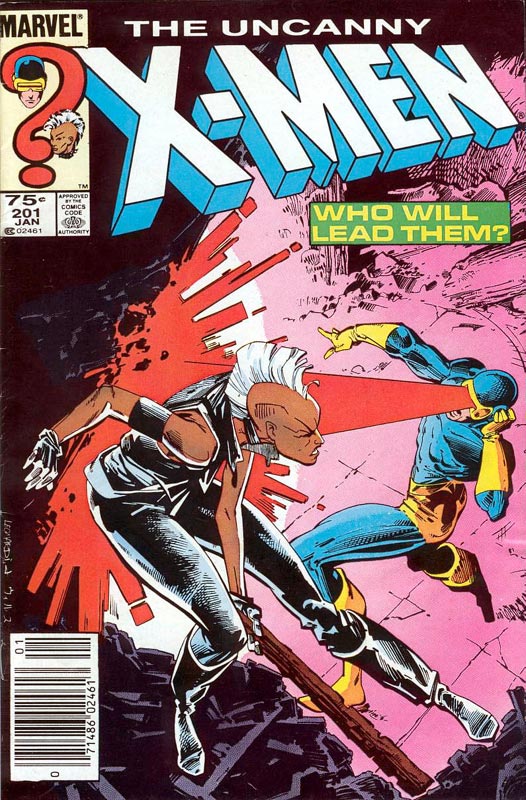
Scott’s unceremonial ousting was also perhaps a side-effect of the expanded role for Halle Berry’s Storm. Berry, miscast from the beginning, and present only because the studio was worried that they needed a big name to draw the crowds to the first, untested X-film, is far and away the worst of the core cast members: she’s a talented actor no doubt, but she just doesn’t get superheroes. James Marsden may not have the star-power of a Halle Berry, but at this point, even if you like Berry’s stiff, bewigged den-mother performance (and frankly, I find that hard to believe), does it really matter? Is anyone really going to see X3 because they’re dying to see Halle Berry throw a lightening bolt in that absurd Jim Lee-inspired disco costume? In the comics, I’ve always preferred (punk) Storm’s leadership to Cyclops’s, and the angst-ridden showdown between Ororo and Scott for leadership of the X-Men in the Danger Room battle from Uncanny X-Men #201 is a classic. The shrug-inducing supplanting of Cyclops by Storm for leadership of the team in X3 epitomizes everything that is wrong with the film dramatically. Scott is simply removed by a fire-tressed deus ex machina and Xavier provides a lame justification for replacing Scott with Storm: he’s “changed” since Jean’s death. Huh? You mean he’s in mourning for his wife, therefore the Professor dumps him? Look into Patrick Stewart’s eyes when he tells Berry’s bewildered Storm about her promotion—not even he’s good enough of an actor to sell that explanation.


The clumsy dispatching of Cyclops is matched by (and to some extent is responsible for) the banality of the movie’s climactic death scene too. Logan’s killing of Jean should be gut-wrenching, but it feels hollow. There’s no emotional pay-off because, despite the torch he’s been carrying for her since the beginning and despite the white-hot chemistry between Jansen and Jackman, the movie doesn’t adequately establish this pair as a romantic couple on screen to make us feel the horror of what Wolverine must do. I’m sorry, but a make-out session with Phoenix and one growly “I love you” aren’t enough. Ironically, this scene would have played much better if poor dead Scott had been in Wolvie’s shoes, or even if he was simply a witness to Jean’s death (as Magneto was to Charles’s) since he and Jean at least have a fully developed relationship. Had Scott not been killed, and had he and Jean enjoyed a genuine reunion before the Phoenix completely possessed her, Scott’s anguish at the beginning of the film might have provided the basis for a truly affecting conclusion as we are forced to watch him regain his partner only to lose her again. As it is, we’re stuck with Wolverine’s unintentionally bathetic sob (the audience laughed) as the movie gives us a neat but empty simulation of a similar but much cooler scene from Grant Morrison’s New X-Men.

Yes, I know. I am a bitter, bitter fanboy, whining that the comic was better. And YES, I know that the films must obey their own dramatic logic and not feel bound to slavishly recreate the source material from twenty-some years of comic book continuity. But the film fails even on the more limited ground of filmic coherence. Its replacement of Scott with Logan is so shabbily and hastily done that the final scene between Wolverine and Phoenix is all special effects and no heart.


And this is too bad, because they almost had something great. We all understand the codes of a resolution like this: by “killing” Jean, Wolverine is elevated to the status of tragic hero. Moreover, the film’s violent climax is also a sublimated consummation of the Logan/Jean relationship. We understand that he is really killing “Phoenix,” not Jean, and in this way, Wolverine gets to have his cake and eat it too. Symbolically he “gets the girl,” but (ironically, given the circumstances) also keeps his hands clean because, technically, he doesn’t really get her: the consummation of their love remains only symbolic and sublimated—in other words, he doesn’t sleep with Scott’s girl, not even after she’s a widow. What makes this all so frustrating is that in many ways it is a perfect resolution: it maintains Wolverine’s role as noble tortured outsider who can never really have the girl, and must thus release his pent up energy in lone flourishes of Berserker rage. But because Scott’s dead, the one character whose anguish and sense of betrayal could invest this climax with some real human feeling is missing, so Wolverine is forced to inhabit the role of tortured leading man. For me, it didn’t work, because Wolverine’s supplanting of Scott’s role happens much too fast. This transformation would have worked better, I think, if it had been given more time to develop and if Scott, Jean, and Wolverine had been the focus of the film—in other words, if X3 had basically been a filmic version of “The Dark Phoenix Saga” and completely dropped the poorly handled “mutant cure” plot, deferring it for a fourth installment of the film. What the overstuffed, underdeveloped plot of X3 shows us, very clearly, is that the X-Men should have been conceptualized as a 4-part series (with part three set in the Hellfire Club environs), not a trilogy.


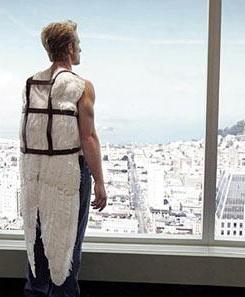
In addition to creating a pacing problem in the Scott/Jean/Logan triangle, the screenwriters’ decision to intertwine the Phoenix story with the “mutant cure” plotline has several other, more serious consequences. On a very basic level, these two plots just don’t mesh well, despite the literalist retooling of Phoenix into an id-like split personality for Jean. Even if she is pissed off with the human race, why on earth does a “level five mutant” need to spin her wheels with Magneto’s Ewok brotherhood? (Is there some rule I don’t know about that requires disappointing third-installments of science fiction trilogies to be set in rainforests? I kept expecting Wicket and friends to drop from the treetops onto the unsuspecting backs of the government’s keystone shock troops. Self-duplicating Jamie Maddrox’s tribe-producing decoy was the next best thing, I guess. Perhaps a filmmaker’s clever jab at the primitivist logic of the Ewoks whereby all members of foreign tribes seem to “look the same” to the racial outsider? We should be so lucky. And boy, do I digress…) The bottom line is that in order for Jean’s reality-altering Phoenix to “work” within the context of Magneto’s war against the mutant cure, Jean has to be put on ice for most of the film. Why is she chilling with Magneto in the woods for 40 minutes? Because Brett Ratner needs to have Wolverine kill her later in a dramatic set-piece ending. Oh, okay. But really, who wants a Phoenix with clipped wings? The more I think about it, the more I love the Warren Worthington/Angels in America allegory, which picks up where Bobby’s coming-out scene from X2 leaves off, but those few soaring moments do not make up for the script’s unforgivable grounding of the film’s other great winged wonder.


The other obvious narrative and aesthetic weakness of the “mutant cure” plot is the introduction of Fraiser Crane’s wretched Beast. Oh my stars and garters. I like the Beast in the comic books well enough, I guess, but suffice it to say that Jar Jar Binks finally has some company in the film-ruining character Hall of Shame.* What CGIed, flatulent Jar Jar was to live-action/cartoon hybrids, Hank McCoy’s blue “Furball” is to Chewbacca-style hair, body paint, and prosthetics: in both cases, the originals were far better. Did X3’s costuming department run out of money? In a single stroke, this pretentious, cheap-looking team mascot demotes the franchise from A-level film, to B- or C-level direct-to-video hackery. Everyone knew that casting pudgy windbag Kelsey Grammer as a gleefully bouncy mutant superhero was a horrible mistake (only Robin Williams could have been worse). But frankly, I’m not sure that any actor could have made this visually absurd character work on screen. As I’ve mentioned in painstaking detail before, the absolute greatest danger besetting any superhero film is the high likelihood of looking ridiculous. There’s no other way to say this: there should have been no Beast. And while I’m on the subject, having the Beast, the BEAST, deliver what was in effect a fatal blow to Magneto is quite possibly the most incomprehensible dramatic choice the movie could have made. Literally anyone would have been a better agent of Magneto’s downfall—though having Mystique/Raven deliver it directly would probably have been the most satisfying choice.

All this dramatic and narrative bungling is bad enough, but my undying ire for Ratner’s mutant fiasco is reserved for the film’s ideological betrayal of every principle that made the first two X-Men movies meaningful, pertinent, and occasionally inspiring.

The film repeatedly gestures—most gracefully in the gay-Angel subplot—at the mutant-as-metaphor-for-difference principle that has underpinned the X-Men concept from the very beginning and which is foregrounded throughout the first two films. But these gestures are belied by the film’s flagrant ideological copout, which turns the X-Men into apologists for the very forces of homogeneity and repression (embodied, as ever, by the government) against which they are usually arrayed.


Simply put: Magento is more right than he is wrong. The state does want to exterminate mutants, it will draw first blood, and this is a war. Now, I know what you’re thinking: yeah…but some of those mutants are dangerous! And what about poor Rogue? She can’t even cuddle with her boyfriend Iceman who’s already ditched her to skate chastely around the pond with Kitty! Doesn’t she deserve the right to choose whether she takes the cure or not? Not all mutant powers are good!

But don’t be fooled: this is the film’s most ingenious and underhanded trick. It’s called sleight-of-hand.

Remember that every metaphor is a comparison that has a tenor and a vehicle. In the cheesy phrase, “My beloved is a jewel,” “jewel” is the vehicle (the metaphorical symbol) for “beautiful” or “precious” (the tenor or implied concepts to which the vehicle refers). Similarly, “a mutant” in the X-Men films is the vehicle for “difference”: racial, sexual, gender, etc. It’s common knowledge that this is the basis of the films’ and the comics’ political allegory.


For those of us who approach the films with some sense of this political allegory (and how can we not? they all broadcast it explicitly), it’s difficult to argue with Magneto, whose call to arms is basically a rallying cry on behalf of difference against the tyranny of sameness (racism, homophobia, anti-Semitism and all its other manifestations). This has been Charles Xavier’s argument throughout the films as well. In other words, Magneto’s call to arms makes visceral sense to most of us on the level of the metaphor’s “tenor”—i.e. its real-world referent.

So how on earth does the film justify the bizarre turnabout by which the X-Men end up functioning as government patsies in the so-called “last stand”? It does so by cunningly (and unconscionably) switching from the level of the mutant-metaphor’s tenor (real-world difference) to its vehicle (fantasy-world mutation). In other words, because Magneto’s argument and actions are morally compelling at the level of the metaphor’s tenor (in the real world, we should all fight against racism and homophobia) the film can only provide a sort of pseudo-justification for the X-Men’s actions by retreating to the level of the metaphor’s superficial vehicle, that is, by acting as though mutant powers are real and by behaving as though what’s really at stake is the right of mutants to choose whether or not they want to keep their powers. Of course, this type of “choice” doesn’t make any sense on the level of the real-world tenor (a gay or black or Hispanic person does not have the option of a “mutant cure” and the whole point of the mutant metaphor is to say that framing the question this way in the first place is an obscene mystification). X3’s sneaky switch from the allegorical level of the tenor to the superficial level of the vehicle to justify its betrayal of the franchise’s politics is an object-lesson in how popular narratives exploit the double-level of allegorical narrative structures to produce deeply reactionary forms of art—and this is only one of the ways in which the film is a giant ideological copout that undermines the trilogy’s pop-radicalism in a way very similar to that dreadful final Matrix picture.


The somewhat more obvious markers of the ideological copout I’m talking about are (1) Magneto’s “evil mastermind voice” during the rally in the woods (a voice which McKellan presents with incredible restraint, as if he was secretly resisting the absurdity of the script and, likely, Ratner’s direction too) and (2) the embodiment of the mutant cure in innocent bubble-boy, Leech, who seems to be imprisoned in (and groomed by the stylists of) one of the austere cubicles from George Lucas’s THX-1138. How do you make the X-Men fight to defend an indefensible cause? Embody said cause in a sweet, innocent little lamb! Only an evil mutant terrorist like Magneto would harm a hair on the head of such a tender darling—oh wait, he has no hairs on his head. See what I mean?

And then there’s Xavier’s suppression of Jean Grey’s Phoenix personality. Now, suddenly, the reason for the incommensurable twining of the Phoenix story and the “mutant cure” story leaps into view. Clearly we’re supposed to understand Jean’s deadly id as another justification—indeed the main justification—for the X-Men’s qualified defense of “the right to choose” a “cure” for difference. After all, Wolverine himself kills her, becoming a sort of double for Leech, a more feral embodiment of the regrettable, but “necessary” cure. And Logan cries, of course, to show us that “cures” like this are a sad, regrettable thing, but necessary all the same—for without Logan’s difficult choice, Phoenix would have us all for breakfast, wouldn’t she? (Allegorically, at least, I wish she would. Now THAT would be a movie.) The point is that, like Rogue’s tragic, alienating power, Jean’s Phoenix personality provides the film with what can only be called “moral pseudo-complexity,” implying that in some cases it’s necessary to suppress difference. You know, when it’s dangerous. (To whom exactly? When? And who are the terrorists again? Ah…yes…)


As with Rogue, at the level of the vehicle (which is to say, literally), Xavier is morally justified in suppressing the Phoenix-power. The destructive Phoenix personality can hardly wander around unfettered. Indeed, Xavier’s mental powers act as a sort of “super”-ego here, for by repressing Jean Grey’s “super” id, he is doing no more than maintaining the general balance that all people maintain between desire and repression in order to live in society without raping, killing, and eating everyone in their immediate vicinity. At the allegorical level of the tenor, however, Xavier’s act is simply a callow anticipation of Leech’s and Wolverine’s various enactments of the suppression of difference. When read in this light, against the grain of the film’s coding, but with the grain of its implicitly conservative ideology, that sad parting smile that Professor X shoots Wolverine in the vortex of Jean’s disintegrating family home is a kind of sinister passing of the torch—an implied sanction for what Wolverine “must” eventually do.

Did it have to be this way? Absolutely not. The Professor’s suppression of Jean’s Phoenix power acquires its sinister meaning only from the context of the “mutant cure” storyline in the film. It should go without saying that there is nothing intrinsically unworkable about writing an intelligent Phoenix story that is consistent with, or even strongly in tension with, the foundational principle of respecting, even loving, difference that informs the X-Men concept. But by pairing the Phoenix story with the “cure” story, the film’s producers, writers, and director have, well…fucked it all up and betrayed the franchise’s principles. All without really trying.

Because, of course, they weren’t trying. X3’s ideas, like its plot, are a badly jumbled mess. Not surprising, since much of the film was reportedly shot without a script. The movie’s abrasively conservative ideology is not evidence of a right-wing conspiracy (that would be giving Ratner and his writers too much credit); rather it is the result of letting a banal, morally vacuous story concept (we need the “good” mutants to fight the “evil” mutants!) overtake the film’s more interesting allegorical possibilities. And let’s not forget that all the major stars of this sales record-breaking franchise were only ever committed for three movies. How do you keep the X-Men juggernaut going without Patrick Stewart, Ian McKellan, Hugh Jackman, Famke Jansen, James Marsden, Anna Paquin, and Halle Berry? Transplant Xavier’s consciousness into a new actor’s body; de-power Magneto; kill Cyclops and Jean Grey. As for the rest, it’s never been hard to explain a few absences around the X-mansion: Logan is off doing his lone wolf thing in his own movie; a now human Marie (Rogue) has gone off to sow some wild oats; and Storm—well, who cares about her anyway? The deaths of the principals in X3 had nothing to do with telling a good story, and everything to do with “tying up the loose ends” so that Marvel could reboot the franchise as the New Mutants with cheaper, younger actors at some future time.

The fact that the film’s conservatism is unintended is no excuse, and has no bearing on the final product. Were my expectations for this film too high? Obviously. But the carelessness with which X3 was handled makes me angry because movie properties like X-Men—properties that have a global reach, which speak directly to kids, and which advertise their moral/philosophical pretensions—have a responsibility to follow through on the ethical vision they promise, even if those ethics are sometimes cartoonish and oversimplified. In short, these are relevant and potentially influential cultural narratives. They deserve better and so do their audiences. Didn’t someone once say, “with great power comes great responsibility”? Oh, wait, that’s right—Brett Ratner isn’t a comic book fan. Never mind.

Movies—good and bad—often contain scenes that come to stand, retrospectively, for the film as a whole. The microcosm of X3 is not, alas, the wonderful floating Grey-family home, with its extraordinarily allusive potential. It’s not even the messy, noisy, anti-climactic final battle between Magneto and his “evil” mutants, though it nearly could be. Instead, it is that awful tableau of Kitty Pryde standing on Astroturf before the cheap-looking Styrofoam headstones of Xavier, Jean, and Scott. A ghost mourning for ghosts. Is this what the once-scrappy X-Men franchise has come to? A dour simulation of gravity? An awed respect for elders? A tragic myth of origins? Let’s hope the kids of X4: New Mutants will remind us what it’s like to soar.


NEW! >> For a very different analysis, check out Thomas’s awesome response-essay defending X3 here.

NEW! >> The debate continues over on David Golding’s Pah!, here and here.

NOTES >> *For an excellent defense of Jar Jar Binks and of the newest Star Wars trilogy generally, see David Golding’s extensive film notes. (Sorry to be bashing Jar Jar again David!)

Sunday, May 14, 2006

Infinite Crisis: A Review of Criticism

In a recent article at the always splendid PrettyFakes, Prof. Fury challenged me to unleash some deadly postmodern jujitsu on Infinite Crisis #7 and prove that “this is the greatest thing ever instead of the worst.” Oh God, Professor. The pressure!

Now, don’t get me wrong. I loved Infinite Crisis for the most part. But as I look back over the series with a more critical eye, even I have to admit that by any reasonable aesthetic standards of storytelling, Infinite Crisis is a bit of a mess. Heck it is a mess—so much so that any straightforward defense of the series on aesthetic merits alone is pretty much a nonstarter.

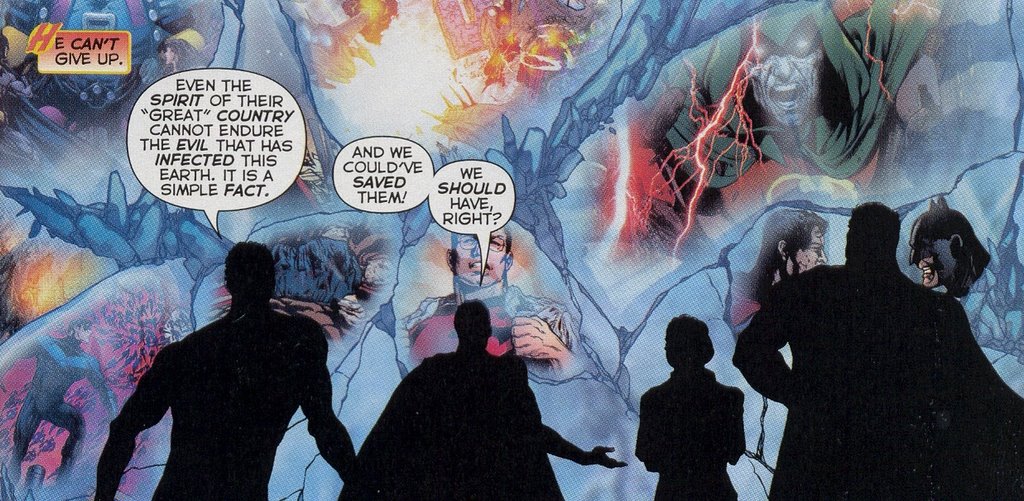
The by-now-familiar critique of the series goes something like this. All together now: Important episodes and clarifying details are missing from the miniseries itself. It was necessary to read (and thus buy) many costly countdowns, prequels, and specials to “get the whole story.” Even when you opened your wallet wide and dug through the couch for loose change to feed your pathetic fanboy habit, the story itself still wasn’t fully told—not by a long shot. A detailed knowledge of the past twenty or more odd years of DC continuity didn’t hurt—though in many ways, it didn’t help either. And to add insult to injury, the story we do get in those seven issues is a disconnected assemblage of money shots, plot-hammers, and non sequiturs, strung together not so much in a narrative as in a kind of postmodern pastiche. In the end, the best metaphor for the storytelling strategy of the series might be that ubiquitous inter-dimensional crystal barrier whose shattering sets the whole Crisis in motion and upon whose fractured surface disconnected images swim in often jarring juxtaposition.

No one has eviscerated the series with more panache or gleeful malice than Evil (Genius) Robby Reed, who makes similar points and many others in a spectacularly baroque (and often hilarious) takedown of DC’s mega-event makeover. But other readers have been pretty handy with the hatchet too. Pól Rua of Comics Should Be Good has a scathing review that depressed me when I first read it, but that I now find myself agreeing with—at least in part. Brian Cronin, also of CSBG, provides one of the most balanced critiques of the series but still concludes with a damning: “Not Recommended.”

As all of these reviewers point out, in one way or another, the problem with IC as a story is that it provides only a simulation of narrative logic rather than the real thing. Its plot presents itself as character-driven when, in fact, characterization plays second fiddle to a ruthlessly story-driven “collection of scenes meant to ‘get something’ done,” as Brian puts it. What is Crisis “for”? To tweak the tone of the “new” DCU by symbolically (and permanently) removing the Golden Age Superman and Lois Lane from the canvas while setting up the premise of 52 and OYL by sending friends-again Bruce, Clark, and Diana on sabbatical. The result, as Pól Rua rather brutally puts it, is “a series of still images [that] flash[ ] across your eyes at high speed, with a couple of crowd pleasing group shots amateurishly scrawled by a series of fill-in artists to keep people from realizing that there’s no story.” Wonder Woman’s almost completely unmotivated killing-is-bad “epiphany” in IC #7, which Brian cites in his review, exemplifies this subordination of characterization and narrative logic to the mercenary presentation of plot-points. Echoing Robby Reed’s broader diagnosis of the underlying malady afflicting the series, Prof. Fury puts it best in his own searing review of IC #7 when he blasts DC for “settl[ing] on a publishing ethic characterizable only as pomo-funhouse capitalism, in which every book is merely an advertisement for a bunch of other books that are themselves advertisements for other books” and charges that “Infinite Crisis, ultimately, takes place in a catalog.”

Yowch! And here I thought that Geoff Johns was the idol of millions…

When I look at IC in the cold clear light of day—that is to say, now that the series has wrapped—I can’t really argue with any of these critiques. At least, not very vehemently. With varying degrees of vitriol (just saw V for Vendetta again—sorry) they are all pointing to genuine weaknesses of what should have been a much better series.

Moreover, like most readers, I’ve accumulated my own list of petty personal gripes and disappointments. The pious group-hug that opens Infinite Crisis #5 was a low point for me, no matter how much principled atheism the truly terrific Mr. Terrific brought to the proceedings. Like Brian Cronin, I was also irked by the way that, after all the initial fanfare, Donna Troy just sort of faded away—most likely because the reception of her Return was so chilly.

The real aesthetic catastrophe of these seven issues, however, was Alexander Luthor’s giant hands—quite possibly the lamest embodiment of cosmic menace ever produced in a comic book event of this magnitude. Yes, I get that they’re referencing Krona’s big blue paw, but I’m sorry: they just don’t work. Evil Robby’s side-splitting (and spot-on) parody of the, er…earth-grabbing scenes pretty much says it all. But the awfulness of the hands was brought home most painfully to me in IC’s version of the clichéd scene that is a fixture of every cosmic crossover ever written. You know the one: all the heroes who can shoot rays out of their bodies pool their energies into a giant power blast to beat back the bad guy.

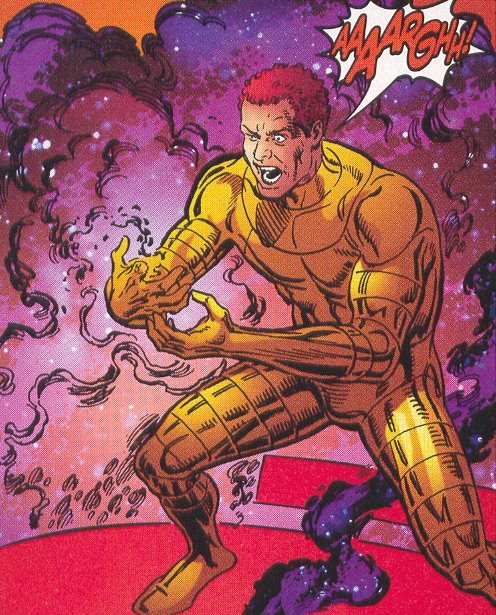
The preposterous amputation of Luthor’s giant index finger in IC #6 attained a level of unintentional self-parody that is pretty hard for even the staunchest series-supporter to forgive.

And yet…

Apart from those risible golden hands, none of this really affected my enjoyment of the series while it was underway. I see the faults, I really do. But I see them the way a smoker sees the warning label on his package of DuMaurier Kings—which is to say, as a sort of surreal, misplaced, grimly amusing public service announcement that surely doesn’t apply to him!

What does it mean to see the lameness and love it anyway—to really love it, not as camp or cheese, but with sniveling unrepentant sincerity? Why do I feel the urge to defend Infinite Crisis, even now? And more to the point, on what basis could so doubtful a project even be attempted?

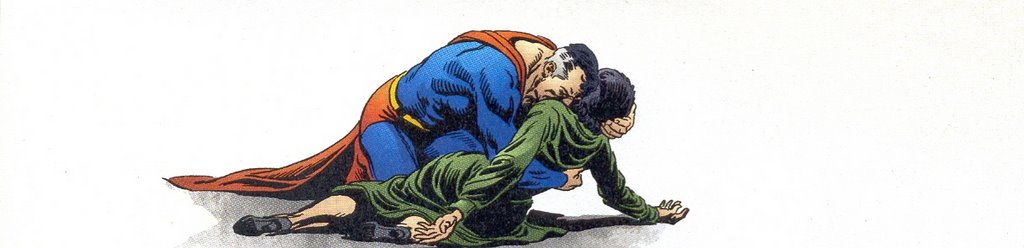
Well, for starters, were things really so bad? Most of the apologies I’ve read online are level-headed, if slightly sheepish, defenses by degree. They usually point out that, on balance, the plot holds together more effectively than detractors have claimed and that, on balance, the abundance of good scenes outweigh the few truly cringe-inducing ones. Many bloggers have already made this case admirably, eloquently, and with the kind of touching futility that I aspire to in most of my posts here at Double Articulation. I’m fully of their party, but the truth is that this line of argument isn’t likely to convince anyone who’s not already on side. This very post was originally going to be a gushing tour of my favorite IC moments, but this ground is already so well-trodden that I think I’ll content myself with merely mentioning one. Okay, two: the Chemo attack on Blüdhaven (holy shit—that’s the Brotherhood I remember) and Connor’s perfectly pitched half-page death scene. “Isn’t it cool?” Yes, it truly is.

A second possible defense of the series is not aesthetic but thematic—and this one just might help me make good on Prof. Fury’s pomo-jujitsu challenge because it actually makes a virtue of one of the series’s most serious and peculiar narrative flaws: its shoddy treatment of the Golden Age Superman.

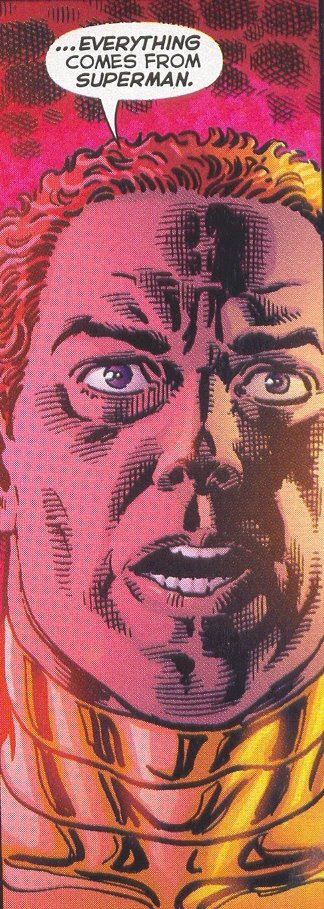
Back when this all began, I made a bunch of rash speculations about multiplicity that haven’t exactly been borne out by the story’s conclusion. Nonetheless, I’m relieved that the series at least makes a show of repudiating a return to the simple 1950s values the Earth-2 Superman represents, even if this repudiation remains partial at best. From where I sit, the series’s ambivalent treatment of the Golden Age Superman—particularly his undignified death—is one of its most fascinating features. I’d even go so far as to speculate that many of the story’s aesthetic failings and incoherencies are merely side-effects of the deep-seated ideological discomfort that its author has with the Golden Age Superman—the iconic but profoundly conservative character from whom, as Alex Luthor coyly puts it, “everything comes.”

The problem with the original Superman for contemporary liberals, leftys, and zany radicals, of course, is that he has become synonymous with a vision of “Truth, Justice, and the American Way” that seems increasingly untenable as we watch its consequences play out around the globe. This puts (liberal?) Geoff Johns in a rather uncomfortable position if he wishes to both pay homage to the founding character of the DCU and subtly repudiate this character’s symbolic political legacy at a fell swoop. The result, as we’ve all just seen, is vexed and—in narrative terms—unsatisfying.

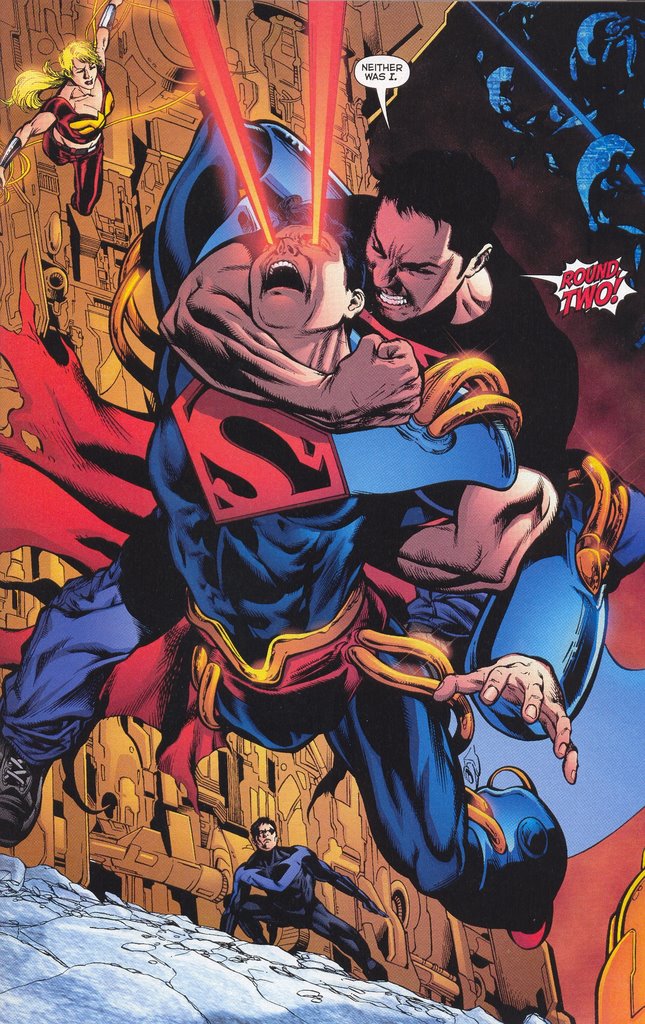
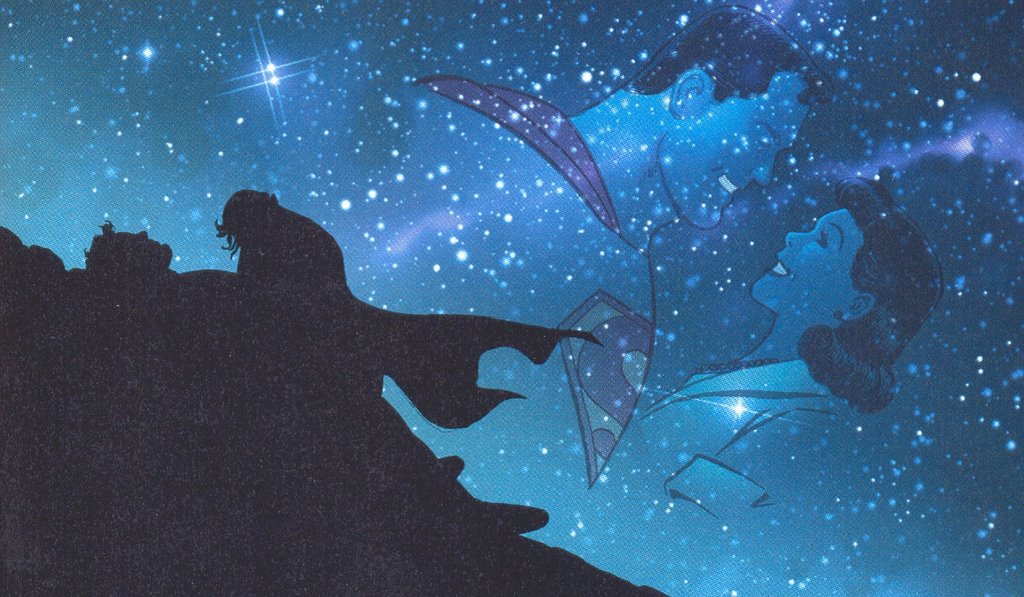
For most of the story, Earth-2 Superman is cast in the unflattering roles of fascist villain and idiot/patsy, after which he is hastily (and unconvincingly) redeemed, only to throw a punch at Doomsday and then be unceremoniously dispatched by snot-nosed brat, Superboy Prime. If Superman’s perfunctory death scene is hollow and hardly touching, it isn’t because they were running out of pages, but because Johns’s heart just isn’t in it. Make no mistake: the real villain of Infinite Crisis—the villain that cannot be explicitly acknowledged as a villain because of his hallowed place in comic book history—is the Golden Age Superman, not Superboy Prime, who is merely a convenient proxy or doppelganger for the elder Supes.

It is, of course, on this note of bizarre irony (Superman as villain) that the series begins, and for some readers, the series’s barely disguised contempt for the original Superman has been an unforgivable insult—a violation of the sacred trust of childhood fantasy. But for Johns, who is a relatively young writer—part of the generation that grew up on Wolfman and Perez’s New Teen Titans, not Siegel and Shuster’s Action Comics or its Silver Age heirs—there is no such sacred trust to recognize: the Golden Age Superman is just a symbol for him (as he is for me), and if the extraordinary abuse that Supes takes in Infinite Crisis is any indication, a fairly pernicious symbol at that.

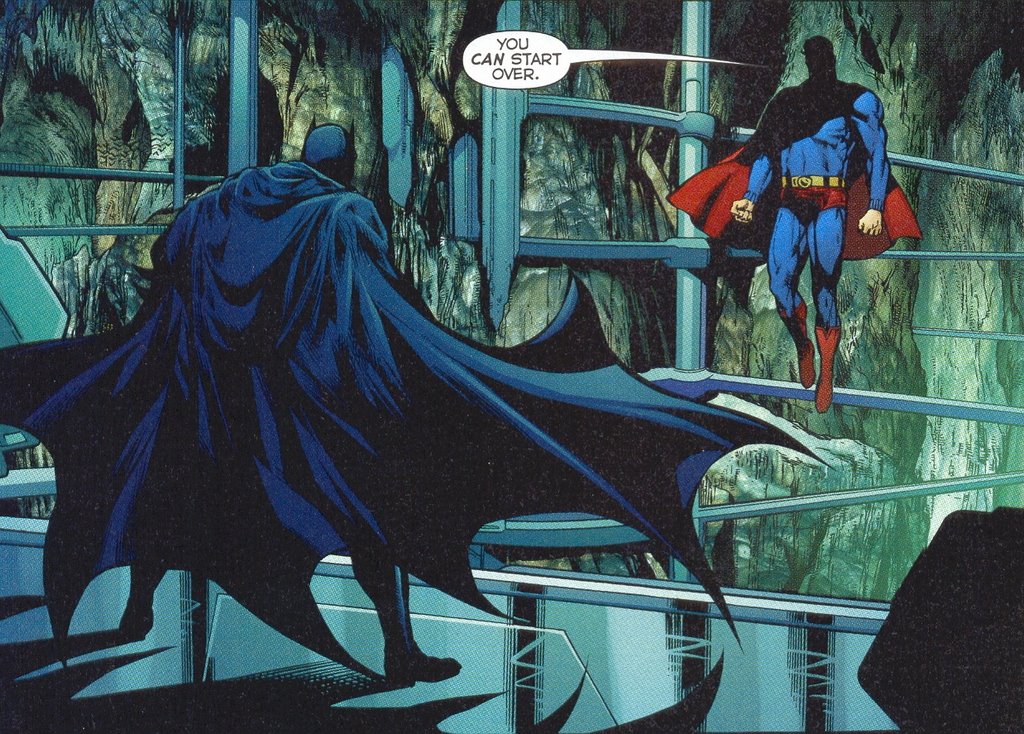
The speech that “our” Superman delivers in the climactic scene of IC #7 nearly makes this ideological struggle explicit: “It’s not about where you were born. Or what powers you have. Or what you wear on your chest. It’s about what you do… It’s about action.” These remarks—which plainly reject the stagnant and antiquated authority of tradition, power, and symbolism in favor of a kind of situational ethics—are of course addressed to Superboy Prime, not to the Earth-2 Superman. But if you buy my argument that Superboy is really just an authorially-displaced version of the former that allows Johns to tell us what he really thinks of old-school Superman, then it isn’t hard to see their relevance: this is Johns’s last word on how the current Superman differs politically from the Golden Age progenitor—a progenitor, I might add, that it is the story’s job to bury once and for all. The death of the Golden Age Superman at Superboy Prime’s hands in Infinite Crisis #7 is thus not a murder so much as a sort of dramatically externalized “suicide” in which the now darkened image of the original Superman tears apart his and earlier, nobler self-image, thus retracing the historical trajectory of the late twentieth-century’s increasingly troubled reception of the Superman mythos.

Why all this fuss to distinguish the new Superman from the old? Why now? Obviously, it makes a strong statement about the new DC. There’s nothing like (the simulation of) a clean break with the past. But Johns is a topical writer, as his Khandaq stories show, and the fact that the values associated with the “old” Superman have enjoyed a dangerous and disheartening resurgence in recent years surely plays a part in how Johns’s treatment of the Earth-2 Superman unfolds. My own feeling is that the basic conflict of Infinite Crisis (like so many pop productions these days) is very loosely conceived as a satire (or perhaps simply a parody) of contemporary American foreign policy. Overgrown child Alexander Luthor’s absurd quest for “the perfect earth” and his violent smashing together of different worlds in his cosmic “Petri dish” to achieve this Quixotic end by force, all remind me of another overgrown and equally sinister child whose actions on the world stage are no less careless, cynical, or destructive.

Naturally, the series performs various plot contortions to disassociate the Earth-2 Superman from Alexander Luthor. But, like this Superman and Superboy Prime, their valuations of simplicity in the moral/political sphere are not fundamentally different. Of course, such parallels and thinly veiled satiric barbs are not really the “point” of Infinite Crisis, and I would hardly characterize the series as a political allegory; nonetheless, I don’t think the resemblances between Luthor’s apocalyptic machinations, Superboy’s deadly tantrums, Superman’s nostalgia for a supposedly simpler time, the Bush Administration’s rhetoric, and the overseas adventures of the American war machine are entirely coincidental.

Thus, for someone like me who gets a kick out of cheap political shots at people and policies I don’t like, Infinite Crisis works as a diverting, if not particularly deep, satire of current politics—regardless of how clunky a resolution of the plot we’re subjected to in issue #7. Beyond this, and more subtly, Infinite Crisis is also fascinating as an example of how contemporary superhero comics are wrestling with the conservatism of their legacy in relation to the obscenity of the current political scene. From this point of view, what makes Infinite Crisis interesting are its flaws—especially those moments when conventional story-elements like the death of a founding patriarch fall flat, when wished-for pathos degenerates into bathos, banality, or even a kind of pop-sadism. This is precisely what we are witnessing in the story’s inability to genuinely mourn the passing of the Golden Age Superman, the hero from which, for better and for worse, “everything comes.” I find the story’s failure in this regard heartening, but only a little.

The fact that the story can’t really commit to its only political subtext, that it must still make the gesture of paying respect to the figure it secretly despises, that it is still intent on recuperating the promise of moral simplicity he represents, despite the remarkable degree of contempt it manifests for this very morality, attests to the intrinsic limitations of mainstream mega-events like Crisis, whatever their satirical overtones. Contrary to my initial hopes, what Infinite Crisis ends up representing politically is how easily an already vague satirical subtext is dissipated by the series’s logistical and corporate concerns: the need to go on, to perpetuate the brand, to “reinvent” by recycling, to “make the lines between heroes and villains in the DCU clear again,” as Dan Didio is so fond of repeating. Thank goodness for Gail Simone’s deliciously subversive Villains United and her forthcoming Secret Six.

But don’t get me wrong, despite getting a little carried away in that wild and wooly debate with Marc Singer a few months ago, I wasn’t expecting Infinite Crisis to provide a profound political justification for its existence. I would have been perfectly content with fun and pretty, so everything else was gravy. As it turns out, I relished its satiric flourishes, such as they were. I also ended up enjoying it as a conflicted cultural artifact that provides a revealing of X-Ray of current attitudes and tensions. I’m certainly not knocking it for being politically ambivalent or even, ultimately, vacuous.

And this brings me to my third and last defense of the series. As much fun as it might be for me to mull over its satirical and political dimensions once the dust has settled, this type of intellectual pleasure is mainly retrospective—it has very little to do with the nature of my (almost unseemly) enjoyment of reading Infinite Crisis while it was still unfolding. What’s up with that? How can it be both “the worst thing” and “the best thing ever”? What is Infinite Crisis anyway?

Fortunately for me, Brian Cronin has already answered this question with perfect clarity: “Infinite Crisis was never about telling a story.” Matthew has answered it too, in the comments thread for Brian’s article: “So maybe it wasn’t a good comic. Was it a good Big Event? Very possibly. I think it positioned DC very well to make better comics in the future. Of course, they still have to go do it.” And so has The Fortress Keeper: “Infinite Crisis was less about weaving an intricate plot with stunning art and rich characterization than delivering the requisite number of ‘popcorn’ moments and setting the stage for future storylines.”

Infinite Crisis is not a story but an event. That sounds like a bit of a cop out since there’s no reason why these two categories should be mutually exclusive: is a well-written “event” really so inconceivable? But, for me, and I think for these other reviewers, the point isn’t to defend IC on the basis that it is “only an event” and thus (?) the rules of good storytelling need not apply—not exactly. Rather, it is to try to account for why, as readers of comic book “events,” so many of us are prepared to overlook the narrative flimsiness of the actual products.

So, how can such “events” be both “the worst thing” and “the best thing ever”? For me at least, the answer is that I don’t actually “read” them in the conventional sense all—and I don’t really think I’m meant to. Brian is exactly right when he says that “Infinite Crisis was never about telling a story”—in fact, virtually no corporately-driven “Big Event” is—and the corollary of this simple fact is that, as a reader, I bring a different set of expectations and reading practices to this kind of text than I do to my usual monthly comics. Big Events like Crisis are not so much stories as Acts of God: we can marvel at them but when Wonder Woman has a spontaneous change of heart, it’s almost pointless to ask “why?” Formally, they are not narratives but gestalts or force fields—they hold everything together with a kind of self-generating magical causality. One doesn’t read them so much as surf them, looking for familiar faces, promising encounters, surprising juxtapositions, important plot-points, and “popcorn moments.” This is the mode of nonreading that the original Crisis taught me, and frankly, every now and then, I like it. Would it have been nice to have a better story? Of course. This isn’t (just) another Jim Roeg-style apology for bad art. The Fortress Keeper’s point that “Infinite Crisis’s failure…to string much of a plot together robs otherwise emotional scenes of their gravitas” is irrefutable. Nonetheless, there really is something special about Event comics like Crisis, even when they fail to deliver on everything they promise.

The “something special”—and the reason why so many of us enjoyed the series, warts and all—is not just that it contained so many great moments but that, as Matthew says, “it positioned DC very well to make better comics in the future.” It’s impossible not be a little bit cynical about this kind of consolation. Of course DC wants us all to take out second mortgages in order to buy more comics, and in this regard Prof. Fury’s diagnosis of the situation as “pomo-funhouse capitalism” is bullet-proof. But it also tells only part of the story. The embarrassing truth is that—for me at least—the pomo-funhouse capitalism of DC’s latest Big Idea really is fun because it overlaps with the pleasure of narrative incompletion in a uniquely powerful way. What we buy when we shell out $5 for an issue of Infinite Crisis isn’t a story—and many of us are not disappointed because that’s not what we’re looking for anyway. What we’re buying is something like the promise of futurity—a promise that inheres in all serial narratives, but which is particularly acute in Big Event miniseries that are by definition transitional and which exude futurity like an aura. In Joseph Conrad’s classic modernist novella, Heart of Darkness, the unnamed narrator famously remarks that, for the story-telling seaman Marlow, “the meaning of an episode was not inside like a kernel but outside, enveloping the tale which brought it out only as a glow brings out a haze, in the likeness of one of these misty halos that sometimes are made visible by the spectral illumination of moonshine.” This characteristic bit of Conradian obscurantism is about as close as I can come to naming my sense of the peculiar way that Big Event comics function at the level of readerly affect and why they’re able to satisfy fairly primal narrative cravings, even when their execution is mediocre.

At least, that’s my story and I’m sticking to it. When all else fails: modernist-jujitsu.

Friday, May 12, 2006

On Existentialism (Part 2): Jim Roeg Does(n't) Cry

So, I had a really, really nice surprise this morning. Gorjus of PrettyFakes fame has paid me the coolest compliment I think I've ever received--check out his utterly amazing artwork based on the final panel from Steve Gerber's and Sal Buscema's Marvel Two-In-One #7 and this recent post by yours truly.

Paper Dolls Don't Cry (This Purse Will Look Great With That Dress!)

Gorjus, what else can I say but THANK YOU! (And please forgive me for stealing this image straight off your site. It's spectacular, and I love it. *Sniff*)

Sunday, May 07, 2006

On Existentialism: Why Paper Dolls Do(n’t) Cry, or Steve Gerber’s Myth of Sisyphus

Everything that is beautiful and profound and human about Steve Gerber’s melancholy aesthetic is summed up in this exceptional panel from Marvel Two-In-One #7 drawn by Sal Buscema:

The world has just been destroyed in a most improbable way: down-and-out alcoholic Alvin Denton (a one-time lawyer whose wife was killed in a car accident and whose daughter ran off with cult) has just blown a tune on the mysterious “Celestia” harmonica, an instrument of fate that “plays the notes of destiny.” Alvin’s cataclysmic playing accelerates his own self-destruction, but it also generalizes the calamity by magically literalizing the truism that the drunkard is “destined to see his whole world destroyed.” The harmonica thus becomes a sort of final blast of the divine trumpet, unmaking the earth and setting Alvin, his “daughter” Valkyrie, the Enchantress, her henchman the Executioner, and the ever-lovin’ blue-eyed Thing adrift, “floating in a kind of un-space amid the pieces of Alvin’s shattered existence.” After a brief skirmish with the Enchantress and the Executioner, it is the Thing who takes up the harmonica called “Celestia” and contemplates which song will best remake the universe.

This moving panel is Gerber’s Creation scene, and it is a précis of his meditation on what it means to be human in a world where, as Sartre once said, existence precedes essence.

Would Gerber call himself an existentialist? Can his work be characterized so narrowly? Perhaps not. I freely confess that I have not read enough of it to say, but smart people who know far more about Gerber than I do seem to think that it has existentialist dimensions, so the connection is at least worth exploring further.

Consider the resonance between the small panel from Marvel Two-In-One #7 (above) and this passage from Existentialism in which Sartre explains his famous dictum by first defining “man” in terms of divinely created essence and then discarding this vision of being for an existential one:

When we conceive God as the Creator, He is generally thought of as a superior sort of artisan.... Thus, the individual man is the realization of a certain concept of divine intelligence.... [Conversely,] atheistic existentialism, which I represent,…states that if God does not exist, there is at least one being in whom existence precedes essence, a being who exists before he can be defined by any concept, and that being is man, or, as Heidegger says, human reality. What is meant here by saying that existence precedes essence? It means that, first of all, man exists, turns up, appears on the scene, and, only afterwards, defines himself. If man, as the existentialist conceives him, is indefinable, it is because at first he is nothing. Only afterward will he be something, and he himself will have made what he will be. Thus, there is no human nature, since there is no God to conceive it. Not only is man what he conceives himself to be, but he is also only what he wills himself to be after his thrust toward existence. (389-90)
Sartre calls this idea, that “Man is nothing else but what he makes of himself,” “the first principle of existentialism,” and I cannot help speculating that it is also a sort of “first principle” for Gerber’s own philosophical, searching, often absurdist, spandex melodramas.

“What do I play ta make the world come back? ‘Melancholy Baby,’ mebbe—or ‘Stardust’? Nuts—how kin I make jokes at a time like this? I’ll just blow—an’ hope fer the best.” What is this but a sly parody of metaphysical thinking? What is this but an existentialist creation scene in which transcendental tropes like the divine breath of creation and the music of the spheres are recast as melancholy human music played on an instrument whose haunting wail is synonymous with the complex emotional register of the blues? Instead of a world of essences, created by God or some other transcendental principle, Gerber gives us a world of existence, created by a man and symbolically (re)created here by Marvel’s greatest existentialist character, the Thing. The rocky, heavy, earth-bound Thing, as Gerber presents him, is an exaggerated, defamiliarized image of humanity grasped as pure existence, without God, without any transcendent consolations whatsoever. If Sartre’s famous dictum that “existence precedes essence” entails the acknowledgement that man creates God, not vice versa, then this scene, in which the Thing takes God’s place to recreate the world in his own flawed and finite image, becomes the embodiment of that difficult existential dictum. It is a “minor” creation scene whose very off-handedness (it is literally one tiny panel on an eight-panel page) is precisely the point. No Kirbyesque cosmic grandeur here. No Eternity, no Celestials, only “Celestia,” stamped on the tin-plating of a dime-store harmonica. And yet, the grandeur and significance of the act is in many ways more profound than the dazzling effulgence of Kirby’s cosmic fantasmagoria.

What makes this panel so moving is that we do not see the Thing’s eyes. They are downcast and hidden by his enormous, craggy brow. This is the bent head of contemplation, responsibility, consciousness—what Sartre calls “anguish”: what is felt by “the man who involves himself and who realizes that he is not only the person he chooses to be, but also a law-maker who is, at the same time, choosing all mankind as well as himself, [and thus] cannot help escape the feeling of his total and deep responsibility” (Sartre 391). But the bent head of the Thing’s anguish is balanced against the musical line that rises from the harmonica, those few sad notes that instantly remake the world as a place of absurd, often painful, but still potentially beautiful habitation. The emotional texture of this perfect panel—for which much credit must go to Sal Buscema—is signified by the harmonica itself: a commonplace instrument inscribed with “celestial” significance.

The sublimity of this panel is inseparable from the symbolism of the Thing himself. To be human in an existentialist universe is to be a Thing. This is what Albert Camus taught us in his famous allegory, “The Myth of Sisyphus,” where Sisyphus, plaything of sadistic gods, another brute compelled to wrestle with rocks, becomes “the absurd hero,” a prototype of existentialist consciousness—in short, a prototype for the Thing himself:
The gods had condemned Sisyphus to ceaselessly rolling a rock back to the top of a mountain, whence the stone would fall back of its own weight.... [O]ne sees merely the whole effort of a body straining to raise the huge stone, to roll it and push it up a slope a hundred times over; one sees the face screwed up, the cheek tight against the stone, the shoulder bracing the clay-covered mass, the foot wedging it, the fresh start with arms outstretched, the wholly human security of two earth-clotted hands. At the very end of his long effort measured by skyless space and time without depth, the purpose is achieved. Then Sisyphus watches the stone rush down in a few moments toward that lower world when he will have to push it up again toward the summit. He goes back down to the plain.

It is during that return, that pause, that Sisyphus interests me. A face that toils so close to stones is already stone itself! I see that man going back down with a heavy yet measured step towards the torment of which he will never know the end. That hour like a breathing-space which returns as surely as his suffering, that is the hour of consciousness. At each of those moments when he leaves the heights and gradually sinks toward the lairs of the gods, he is superior to his fate. He is stronger than his rock.

If this myth is tragic, that is because its hero is conscious. Where would his torture be, indeed, if at every step the hope of succeeding upheld him? The workman of today works every day in his life at the same tasks, and this fate is no less absurd. But it is tragic only at the rare moments when it becomes conscious. Sisyphus, proletarian of the gods, powerless and rebellious, knows the whole extent of his wretched condition: it is what he thinks of during his descent. The lucidity that was to constitute his torture at the same time crowns his victory. There is no fate that cannot be surmounted by scorn. (407-08)
Gerber’s Thing is not “scornful” of fate so much as he is glumly prepared to endure it, but the sense of tragedy that surrounds his character stems precisely from his consciousness of the absurdity and interminability of his suffering. Yet, for Gerber, as for Camus, this “tragic” existential consciousness isn’t cause for despair. The Thing in question may be Ben Grimm, but he is also “ever-lovin’” and “blue-eyed.” As Camus puts it in a moment of startling reversal,
If the descent [of Sisyphus] is sometimes performed in sorrow, it can also take place in joy. This word is not too much.... One does not discover the absurd without being temped to write a manual of happiness.... Happiness and the absurd are two sons of the same earth. They are inseparable. (408)
In Gerber’s existentialist creation scene, the Thing is a Sisyphian creator-hero, poised precisely between melancholy (what Camus calls “the victory of the rock”) and the astonishing claim that “One must imagine Sisyphus happy” (Camus 409). Confronted with the oblivion of “un-space,” nothingness, the Thing wonders: “What do I play ta make the world come back? Melancholy Baby, mebbe—or Stardust?” Read the lyrics to these songs. They are melancholy and nostalgic, but something else too:
You shouldn’t grieve; try and believe
Life is always sunshine when the heart beats true.
Be of good cheer; smile through your tears;
When you’re sad it makes me feel the same as you.
Set in the context of Gerber’s existentialist creation, these songs, especially George A. Norton and Ernie Burnett’s “My Melancholy Baby,” are something like the “manual of happiness” to which Camus enigmatically alludes. They are blueprints for a mode of living authentically, consciously, in a world where nothing but our existence is pre-given, where value must be made, and where—for better or worse—anything is possible. “Be of good cheer; smile through your tears; / When you’re sad it makes me feel the same as you”: this is the magnificent ethical vision of Gerber’s committed existentialism. Look a little further down the page from the scene in which Ben Grimm’s human music remakes “not the best” world but “the world as we know it.” You will see these three panels in which Valkyrie realizes that the one man who could have provided her with the “truth” of her identity is now forever out of reach:

How else could an existential creation end except with a discovery of the death of the Father? Gerber’s story allegorizes the frustrated hope for easy answers and “revelations” about identity and being. It gives us only Val’s confrontation with the blankness of her own identity and her dawning consciousness that she, like Grimm, is a human thing “condemned to be free” (Sartre 393). That is, she is condemned to, but also liberated by, an existence without essence: empty, except for what she chooses to become. It ends with Ben’s hard-boiled compassion, a gruff rephrasing of those tragic, beautiful, affirmative lines from “Melancholy Baby”: “Whatever ya are, kid—it ain’t that. Or my shoulder wouldn’t be getting’ drenched. Paper dolls don’t cry. Only us real people got that problem.”

This statement is more paradoxical (and joyful) than it seems because, of course, Val and Ben really are “paper dolls” in at least two senses. As comic book characters, they are literally “fiction[s]”—in this sense, Val is right to lament that she is “an empty façade, a fiction,” even if she does not grasp the metafictional significance of what she is saying. But Val is right in another, profounder sense too if we take her anguish over being “an empty façade, a fiction” as a moment of genuine existentialist consciousness—consciousness of a world without essences, a world not designed and governed by some divine “father.” “Fiction,” in this sense, simply designates an identity that has become unmoored from the consolations and pseudo-certainties of metaphysics, and in this sense Val and the Thing are fictions, are “paper dolls”—just as we all are in an existentialist night. The exquisite irony of this ending is that paper dolls do cry, despite what Ben says to make Val feel “human.” In other words, this concluding sequence appears to oppose “paper dolls” to “real people,” but it actually does something far more interesting: it redefines what it means to be human in a single stroke by collapsing the distinction between “paper dolls” and “real people,” making it untenable. This is the deconstructive moment of Gerber’s “Two-In-One” where the shift from metaphysics to existentialism that had been condensed in the panel of parodic creation (the Thing and his harmonica) is unpacked and dramatized as a minor, and deeply moving existentialist fable in which the Thing now plays his fully human role instead of playing a parody of God.

For me, what accounts for the incredible pathos of this ending is the paradoxical nature of Ben’s consoling remark. Val’s tears affirm the most profound truth of Gerber’s universe: that to be human is to suffer. But Gerber’s genius is to make this tragic truth its own consolation, for it is precisely Val’s suffering that affirms her humanity at the very moment that she sinks into anguish at not having a metaphysically-grounded identity. There’s something strangely uplifting about this melancholy ending. Camus:
If the descent [of Sisyphus] is sometimes performed in sorrow, it can also take place in joy. This word is not too much....One does not discover the absurd without being temped to write a manual of happiness....Happiness and the absurd are two sons of the same earth. They are inseparable....

I leave Sisyphus at the foot of the mountain! One always finds one’s burden again. But Sisyphus teaches the higher fidelity that negates the gods and raises rocks. He too concludes that all is well. This universe henceforth without a master seems to him neither sterile nor futile. Each atom of that stone, each mineral flake of that night-filled mountain, in itself forms a world. The struggle itself towards the heights is enough to fill a man’s heart. One must imagine Sisyphus happy. (408-409)
To this, Gerber might add that the difficult happiness that accompanies existential freedom flourishes not in the isolated, alienated figure of Sisyphus, the “absurdist hero,” but in communities of other such “real people” whose marginality has provoked them to similar struggle and reward. The Defenders are, of course, a very prominent expression of this communal impulse in Gerber’s work, and as plok says in his fascinating inaugural "Seven Soldiers of Steve" post, Gerber’s Defenders valued community in a way that Englehart’s did not:
[For Englehart’s Defenders], being a “non-team” was primarily a way of acknowledging that they each preferred their own individual, solitary company to that of society’s, and they were all secure enough in their own skins that they never apologized for preferring to be strangers.

Gerber’s Defenders, though, were different. They wanted to fit in and find their place as much as their previous iterations wanted nothing of the kind: Gerber’s Valkyrie was less the warrior-woman and more the ingenue, the foundling abandoned on identity’s doorstep; Nighthawk (introduced to the team by - who else? - Len Wein, who it must be noted was the one who instituted this shift to a friendlier “non-team,” that was more a group of friends who all hung out together than a pack of loners jammed together by necessity, or an organization with code-names and signal devices) was a man trapped by his own conditions of past and class and error, who wanted nothing more than to make a fresh start, even if to do so made him a less confident, less effective person; the Hulk was more a misunderstood child than a threatening monster; and Dr. Strange was (as Kurt Busiek put it in his Defenders run) a warm and avuncular presence, suffused with calm and inner peace, rather than the sometimes-impatient, work-obsessed prima donna he had often been portrayed as before. Each of these characters remained as potent, and potently symbolic, as they had been earlier; but because their attitude to their world had changed, what they had to do in it changed as well. They wanted to fit in, yes: but on their own terms and in their own places, instead of merely taking up desultory roles or niches at the centre, where the other superheroes lived. Because they wanted their roles to fit in with their lives, not their lives with their roles.
As even these few remarks indicate, plok’s analysis of the Defenders as a “meditation on life outside the mainstream, but not all the way outside the mainstream,” takes the notion of a superheroic community of misfits who “wanted their roles to fit in with their lives, not their lives with their roles” in the direction of the politically engaged consciousness that is central to Gerber’s stories, including the stories in Marvel Two-In-One that I haven’t even begun to analyze here. I agree wholeheartedly with plok’s reading; all I have been trying to sketch out are some preliminary thoughts about the existential subtext of Gerber’s political project—particularly his fascination with marginality and questions of responsibility and social justice. It isn’t for nothing that the issue of Marvel Two-In-One I’ve been speaking about ends with a strange embrace, with tears on a compassionate but unyielding shoulder of rock. It ends, in other words, with a strange human community—the Thing and Val—an odd-couple of the type that Marvel Two-In-One, especially Gerber’s, will specialize in. Indeed, Gerber’s stories in Marvel Two-In-One (as the book’s title and concept suggest) are really all studies of the strange community motif that is not just a consolation but (I suspect) a genuine political goal. In a future essay I want to explore how, in Gerber’s work in these issues of MTIO, the strange community emerges as a vision that is at once philosophical, ethical, and political: democracy, or perhaps, “America” as non-team.

In the context of such utopian yearnings, the fact that existential themes often take the form of melancholy or despair is not surprising—such expressions are signs, perhaps, of the Sisyphian difficulty of achieving the sort of social transformation to which the stories themselves repeatedly allude. But Gerber’s existentialism is not just a cry of anguish. As I’ve been suggesting here, it is also the precondition of a kind of grim (Grimm?) optimism: the strange happiness of Sisyphus who struggles with the anguish of his own freedom and the awesome responsibility that such radical freedom entails. This is the happiness of Ben Grimm (a cipher for Gerber himself) who must play the world into existence on a cheap harmonica. And most of all, it is the painfully human happiness that is presented to us like a gift in that memorable image of Valkyrie wrapped in the Thing’s embrace: it is the happiness of knowing why paper dolls don’t cry but also why they do, of what it means to be “real people,” and of the strange communities that such difficult knowledge makes possible.


Works Cited

Camus, Albert. "The Myth of Sisyphus." Trans. Justin O'Brien. Casebook on Existentialism 2. Ed. William V. Spanos. New York: Harper & Row, 1976. 406-409.

Sartre, Jean-Paul. "Existentialism." Trans. Bernard Fretchman. Casebook on Existentialism 2. Ed. William V. Spanos. New York: Harper & Row, 1976. 387-406.